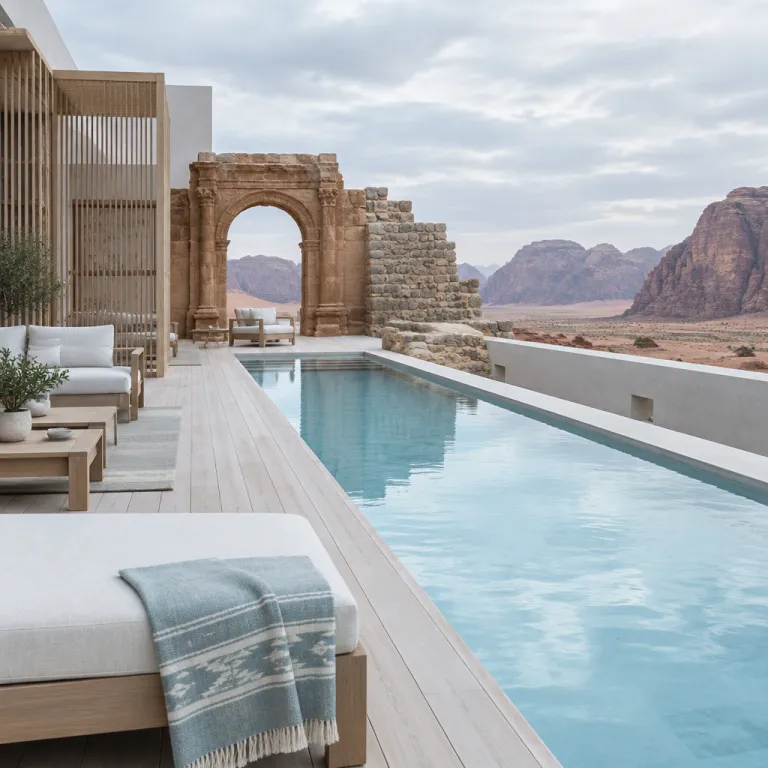
Luxury stays as a gateway into Jordanian culture
Choosing a luxury hotel in Jordan can be your most refined entry point into Jordanian culture. High-end properties across the country now curate stays where architecture, service, and storytelling reflect how Jordanians live, host, and share their traditions. For travellers, this means every detail in Amman or by the Dead Sea can quietly teach you something meaningful about local life and heritage.
In the capital Amman, premium hotels often frame panoramic views of the city’s hills while integrating subtle references to Jordanian culture in their interiors. You may see geometric patterns inspired by heritage sites such as Petra or Mount Nebo, or photographs of the Arab Revolt and the late King Hussein that anchor the décor in a specific century and region. These visual cues help people understand how the country moved from the era of the Ottoman Empire to the modern reign of King Abdullah without needing a guidebook.
Many luxury properties now train staff to explain local customs as naturally as they explain spa menus. When a welcome coffee is served, for example, the server might describe why cardamom is important in Jordanian cuisine and how this Middle Eastern aroma signals respect for guests. In the same way, concierges can outline etiquette Jordan travellers should know, such as greeting women with care and reading subtle body language before offering a handshake.
Language also plays a central role in how hotels interpret Jordan’s culture for international guests. Front desk teams usually switch easily between Arabic and English, and some properties provide a curated newspaper selection that includes both local Arabic titles and international dailies. This bilingual approach reflects the role Jordanians play as mediators between the wider Middle East and visitors from Europe, Asia, and North America.
Jordanian cuisine as the heart of cultural immersion
For many guests, the most vivid expression of Jordanian culture in a hotel is found on the plate. Luxury properties across Jordan now treat Jordanian cuisine as a narrative tool, using tasting menus and live stations to explain how Bedouin heritage, urban Amman life, and Middle Eastern trade routes shaped local flavours. When a dish is served, chefs often share the story behind its ingredients, turning dinner into a quiet lesson in regional traditions.
Breakfast buffets in Amman or at the Dead Sea typically highlight regional products that define daily life in Jordan. You might see labneh drizzled with olive oil from northern groves, or freshly baked taboon bread that echoes recipes from the time of the Ottoman Empire. Some hotels even align their menus with seasonal agricultural rhythms, mirroring experiences such as the olive oil trail and autumn harvest tables that food-focused travellers seek beyond the property.
In higher-end resorts near Petra or Wadi Rum, chefs sometimes recreate Bedouin zarb, a traditional meal cooked in an underground oven. Guests watch as meat and vegetables are slowly unearthed, then are served generous portions while staff explain how this method suited nomadic people who moved frequently across the region. Experiencing both intimate zarb feasts and larger zarb banquets helps visitors understand how Jordanians use food to reinforce community bonds.
Luxury hotel bars and lounges also interpret Jordanian culture through drinks and small plates. Non-alcoholic cocktails might blend pomegranate, mint, and dates, while mezze platters present Middle Eastern classics such as hummus, mutabbal, and falafel alongside lesser-known Jordanian specialties. When staff explain which dishes come from Amman, which from the northern region, and which from Bedouin communities, guests gain a layered sense of local customs without leaving their armchair.
From Petra to Jerash: heritage sites woven into hotel experiences
Many travellers arrive in Jordan with images of Petra already in mind, yet luxury hotels can deepen that first impression by connecting stays to multiple heritage sites. Properties in Petra often design excursions that link the main Siq and Treasury with quieter Petra Wadi trails, allowing guests to see how Nabataean culture shaped the landscape over more than one century. When you return, spa rituals and evening talks extend the story of Jordan’s past rather than simply closing the day.
In Amman, concierges at premium hotels frequently recommend day trips that combine Jerash, Mount Nebo, and the Dead Sea to show how different eras left their mark on the country. Some itineraries highlight how Roman columns, Byzantine mosaics, and early Islamic architecture coexist within a compact region, illustrating the layered nature of Jordanian culture. For travellers who enjoy reflective atmospheres, experiences such as Jerash after hours can be paired with quiet, late-night returns to the hotel.
Film enthusiasts often choose hotels that reference famous productions filmed Jordan-wide, from Wadi Rum’s red sands to the carved façades of Petra. When a concierge points out that scenes from international movies were filmed in Jordan side by side with local documentaries, guests see how the country’s landscapes now shape global images of the Middle East. This cinematic angle adds another layer to Jordanian identity, showing how heritage sites function as both sacred spaces and modern stages.
Some luxury properties also curate private visits or small group tours to lesser-known qasr desert castles, where early Islamic art and inscriptions reveal how rulers once asserted power across the region. Guides explain how these qasr complexes relate to the Arab Revolt, the Ottoman Empire, and later decisions by King Hussein and King Abdullah. Back at the hotel, guests often continue the conversation over tea, linking what they saw at heritage sites to the contemporary role Jordanians play in regional diplomacy.
Bedouin traditions and Wadi Rum under five star skies
Wadi Rum has become a symbol of Jordanian culture for travellers seeking both luxury and authenticity. High-end camps and lodges in this desert region now blend Bedouin traditions with refined comforts, allowing guests to sleep under vast skies without sacrificing quality linens or attentive service. The result is an experience where cultural practices are not staged performances but living customs shared by local people.
Many of the hosts in Wadi Rum come from Bedouin families who have served as guides for generations, leading caravans long before modern tourism arrived in the country. They explain how tribal structures work, how women and men share responsibilities, and how oral poetry in Arabic preserves memory across time. When guests listen around the fire, they often sense how Jordanian culture carries both resilience and grace in a harsh environment.
Luxury desert stays also highlight how Wadi Rum connects to broader narratives in the Middle East. Guides may recount how the Arab Revolt passed through this region, linking local valleys to figures later honoured by King Hussein and King Abdullah in national history. Some will point out rock bridges or canyons where international productions filmed Jordan scenes, showing how this landscape now shapes global perceptions of the country.
At night, refined camps often dim electric lights so that stars become the main spectacle, while staff serve traditional tea and sometimes light meals cooked in the sand. Guests learn why certain dishes are favoured by Bedouin travellers and how these recipes influenced Jordanian cuisine in Amman and other cities. This blend of comfort and cultural depth makes Wadi Rum one of the most powerful places to feel Jordan’s spirit while still enjoying premium hospitality standards.
Amman city life, women’s perspectives, and modern Jordanian culture
Luxury and premium hotels in Amman sit at the crossroads of old neighbourhoods and new business districts, making them ideal bases for understanding contemporary Jordanian culture. From rooftop pools, guests watch the city’s hills shift from soft morning light to glittering night views, while hearing the layered sounds of Arabic conversations and car horns below. This urban rhythm reveals how Jordanians balance heritage with modern aspirations in a fast-changing region.
Many properties now collaborate with local artists, designers, and entrepreneurs to showcase how women and men contribute equally to cultural life. You might find exhibitions by Jordanian women photographers in the lobby, or jewellery pop-ups that reinterpret Bedouin motifs for a global audience. As one Amman-based curator noted in a recent hotel talk, “Luxury here is not just marble and glass; it is the chance to see Jordanian women shaping the city’s creative future.”
Hotels also act as informal hubs where the role Jordanians play in regional diplomacy and business becomes visible. In lounge areas, you may overhear discussions in both Arabic and English about trade, technology, or cultural projects that link Jordan to neighbouring countries. Reading a local newspaper alongside an international title at breakfast can further illuminate how the country positions itself between tradition and innovation.
For guests who want deeper immersion, some premium properties encourage slow travel approaches that extend beyond standard city tours. Experiences such as highland homestays and eco villages can be arranged from Amman, allowing travellers to see how customs Jordanian communities maintain in rural areas complement urban lifestyles. Returning to a comfortable hotel after such excursions lets you process how Jordanian culture feels both unified and diverse across different landscapes.
Practical tips for choosing culturally rich luxury hotels in Jordan
When selecting a luxury or premium hotel in Jordan, focus on how each property engages with local culture rather than only on room size or spa menus. Look for hotels that employ local staff in visible roles, support Jordanian cuisine in their restaurants, and offer guided visits to heritage sites such as Petra, Mount Nebo, or the Dead Sea. These choices ensure your stay benefits both you and the people who call this country home.
Ask potential hotels how they integrate cultural traditions into daily operations and guest experiences. Some properties organise talks on the history of the Ottoman Empire and the Arab Revolt, while others host evenings where Bedouin musicians perform and explain their instruments. A few even invite historians to discuss how decisions by King Hussein and King Abdullah shaped modern Jordanian society and the current role Jordanians play in the wider Middle East.
It is also wise to consider how a hotel handles language and information. Properties that provide both Arabic and English materials, including at least one local newspaper, usually show stronger engagement with Jordan’s heritage and better support for international guests. When staff can explain why certain dishes are served at specific times, or why qasr desert castles matter as heritage sites, you gain far more than a comfortable bed.
Finally, think about how your stay might support sustainable tourism across the region. Choosing hotels that partner with local guides in Petra Wadi areas, employ residents from Wadi Rum communities, or source ingredients from nearby farms helps preserve customs Jordanian communities value. In doing so, you participate directly in the ongoing story of Jordanian culture, ensuring that future travellers can experience both its singular moments and its shared traditions.
Key figures on Jordanian culture and luxury travel
- According to the Jordan Tourism Board, tourism contributed around 13% of Jordan’s GDP in 2019 before recent global disruptions, underlining how strongly the country’s economy depends on sharing Jordanian culture with visitors (Jordan Tourism Board, Tourism Statistical Newsletter 2019, available via visitjordan.com).
- UNESCO currently lists six World Heritage Sites in Jordan, including Petra, Wadi Rum, and Qasr Amra, which means luxury hotels have multiple heritage sites within reach for curated cultural excursions (UNESCO World Heritage Centre, Jordan country overview, accessed 2024).
- Surveys by regional hospitality consultancies indicate that more than 60% of high-end travellers to the Middle East now prioritise cultural immersion, making Jordan-focused programming a competitive advantage for premium hotels.
- Data from the Jordan Tourism Board shows that average length of stay increases when itineraries combine Amman, Petra, Wadi Rum, and the Dead Sea, suggesting that multi-region cultural journeys encourage guests to spend more time and resources in the country.
FAQ about Jordanian culture in luxury and premium stays
How can I experience authentic Jordanian culture while staying in a luxury hotel?
Choose properties that highlight Jordanian cuisine, employ local guides, and offer visits to heritage sites such as Petra, Wadi Rum, and Mount Nebo. Ask about cultural talks, music evenings, or cooking demonstrations that explain customs Jordanian communities follow. These elements indicate a genuine commitment to local culture rather than surface-level décor.
Are luxury hotels in Jordan suitable for solo women travellers interested in culture?
High-end hotels in Amman, Petra, and the Dead Sea region are generally very welcoming to women travelling alone. Staff are used to international guests and can explain local customs, including how Jordanians typically greet women in public spaces. Many properties also offer women-led tours or experiences that highlight the role Jordanian women play in arts, food, and social initiatives.
Which areas of Jordan combine luxury stays with strong cultural experiences?
Amman offers access to museums, galleries, and urban Jordanian culture, while Petra and Petra Wadi areas connect you to Nabataean heritage and dramatic landscapes. Wadi Rum provides Bedouin traditions under desert skies, and the Dead Sea region adds wellness-focused stays linked to biblical history and nearby Mount Nebo. Combining these regions gives a rounded view of Jordan’s culture across different environments.
How important is language when choosing a luxury hotel in Jordan?
Language shapes how easily you can engage with Jordanian culture during your stay. Hotels that provide information in both Arabic and English, including at least one local newspaper, usually offer richer context about the country and its people. Bilingual staff can also explain subtle customs visitors might otherwise miss, from dining etiquette to respectful behaviour at religious sites.
Can luxury hotels arrange visits to less known cultural sites such as qasr desert castles?
Many premium properties work with specialised guides who can take you beyond Petra and Jerash to qasr desert castles and smaller heritage sites. These excursions often include historical explanations that link the Ottoman Empire, the Arab Revolt, and modern decisions by King Hussein and King Abdullah. Asking about such options is a good way to gauge how deeply a hotel engages with Jordan’s culture rather than focusing only on famous landmarks.