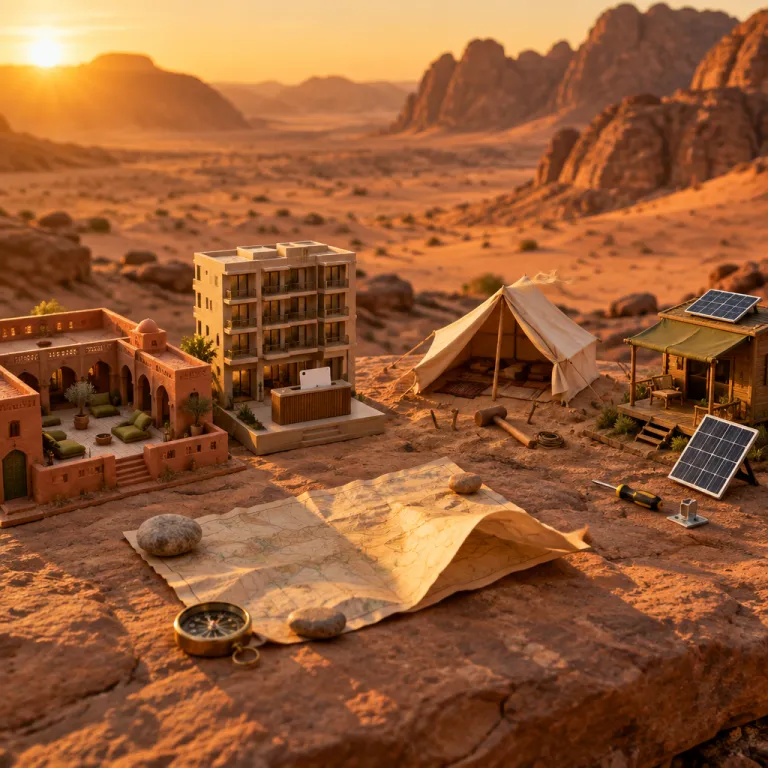
How accommodation in Jordan shapes your itinerary and budget
Accommodation in Jordan quietly dictates how your journey through the country will feel. The type of hotel or camp you choose determines your rhythm between Amman, Petra, the Dead Sea and Aqaba on the Red Sea coast. For a premium family, the right mix of hotels and camps turns a good Jordan visit into a genuinely memorable stay.
Think of Jordan hotels as five distinct families, each serving a different travel style and budget. International chain hotels, characterful Jordanian owned properties, desert camps in Wadi Rum, eco lodges in nature reserves and heritage stays near archaeological sites all answer different needs. Matching these to your time in each city or wadi is more important than chasing the most popular destination by name alone.
For a seven to ten night itinerary, most families split their accommodation in Jordan between Amman, Petra, Wadi Rum, the Dead Sea and the coastal city of Aqaba. A typical pattern is two or three nights in an Amman hotel, two nights in Petra, one or two nights in a Wadi Rum camp and two or three nights by the Dead Sea or Red Sea. The balance between resort spa relaxation, desert adventure and city culture is what really defines your Jordan stay.
International chains in Amman, Dead Sea and Aqaba: when predictability wins
International chains dominate the upper end of the hotel scene in Amman, the Dead Sea shore and the resort strip in Aqaba. Families who value consistency, loyalty points and familiar services often start their search with a Kempinski Hotel, a Mövenpick Resort or a Hyatt. These brands anchor the premium accommodation landscape in Jordan and give first time visitors an immediate sense of what to expect.
In Amman, the Kempinski Hotel Amman, Four Seasons Hotel Amman and similar properties offer polished rooms, reliable room service and extensive spa facilities. Their pools become social hubs for families, especially in summer when the city heat rises. For a deeper look at elegant stays in Jordan’s main cities, the guide on elegant stays in the most captivating cities in Jordan is a useful starting point.
Along the Dead Sea, large resort spa complexes such as the Mövenpick Resort & Spa Dead Sea, Kempinski Hotel Ishtar Dead Sea and similar Jordan hotel options line the mineral rich shore. Here, your stay revolves around the pool, the private beach and the spa rather than the surrounding city, because there is no real urban centre on this stretch of coast. These hotels in Jordan are ideal for two or three nights of recovery after Petra and Wadi Rum, especially for families arriving on a Royal Jordanian flight and wanting a soft landing.
Characterful Jordanian owned hotels in Amman and Madaba
Once you have a night or two secured in a chain property, consider adding a smaller Jordanian owned hotel to your accommodation in Jordan. In central Amman, particularly around Jabal Amman and Jabal Al Lweibdeh, these hotels offer a more intimate stay with strong local character. They often sit in renovated townhouses, with fewer rooms than the big international brands but more conversation with the owners.
For families, the advantage is a sense of neighbourhood life in the city rather than just a lobby to pass through. You can walk from your Amman base to cafés, galleries and small parks, then return to a room that feels part of the urban fabric. One family described their stay as “like borrowing a friend’s apartment, but with hotel housekeeping.” For a curated list of refined properties in the capital, the guide to elegant stays and refined hotels in Jordan for an Amman escape highlights reliable options.
Madaba, about thirty minutes from Queen Alia International Airport, is another smart place to book a Jordan hotel with local ownership. It works well as an airport hotel alternative when you prefer mosaics and church towers to runway views, especially if your Royal Jordanian flight lands late. Staying here for one night at the start or end of your Jordan visit lets you experience a smaller city while still keeping transfer times short.
Desert camps in Wadi Rum: the stay your children will remember
For many families, the Wadi Rum camp experience becomes the emotional centre of their accommodation in Jordan. The desert landscape of Wadi Rum, with its sandstone towers and wide sandy wadis, feels cinematic yet surprisingly accessible. Children remember the silence, the stars and the sense of sleeping far from any city lights.
Camps in Wadi Rum range from simple Bedouin tents with shared facilities to high end domes with private bathrooms and even small plunge pools. Luxury camps often market themselves as glamping, but the real value lies in the guiding, the jeep tours and the quality of evening meals rather than just the tent design. A typical family day might include a late afternoon jeep tour to watch the sunset, a shared dinner around the fire and an hour of stargazing before everyone walks back to their tents by lantern light. If you are planning a Jordan visit around stargazing and desert skies, the in depth guide to dark skies and stargazing camps in Wadi Rum is essential reading.
Families usually book one or two nights in a Wadi Rum camp as part of a wider accommodation plan that also includes Petra and the Dead Sea. One night gives you sunset, dinner under the stars and sunrise over the wadi, while two nights allow time for longer hikes or camel rides. Remember that desert camps are not hotels in the usual sense, so services are simpler, but the trade off is an experience that no city hotel can match.
Eco lodges and heritage stays: when Jordan’s landscapes lead
Eco lodges in Jordan, many managed by the Royal Society for the Conservation of Nature, offer a different style of accommodation in Jordan focused on sustainability and immersion. Properties such as Feynan Ecolodge in Dana Biosphere Reserve or the lodges in Ajloun and Azraq are deliberately simple. They replace the usual hotel pool and spa with guided hikes, astronomy sessions and community visits.
These eco lodges suit families who want their Jordan visit to include more than the classic Petra and Wadi Rum combination. Nights here are often quieter than in a resort spa, with candlelit dinners and early starts for walks through wadis and villages. Because they sit far from any major city, you need to plan transfers carefully, especially if you are connecting from an airport hotel after a late arrival.
Heritage stays, often in restored Ottoman houses or stone village homes, cluster around Petra, Madaba and Umm Qais. In Wadi Musa, the town that serves Petra, you can choose a Jordan hotel that feels more like a guesthouse, then spend your days walking between the resort style properties near the entrance and the archaeological site itself. These heritage hotels in Jordan rarely have large pools or extensive spa services, but they compensate with atmosphere and proximity to history.
How to allocate nights across Amman, Petra, Wadi Rum, Dead Sea and Aqaba
Designing a seven to ten night accommodation plan in Jordan starts with mapping your priorities rather than chasing every popular destination. For a premium family, a balanced route usually includes Amman, Petra, Wadi Rum, the Dead Sea and Aqaba on the Red Sea. The question is not whether to visit each place, but how many nights to give them and which type of hotel or camp to choose.
A classic nine night itinerary might look like this for a first Jordan visit. Spend two nights in an Amman hotel at the start, then drive to Petra for two nights in a resort style property or heritage stay. Continue with one or two nights in a Wadi Rum camp, followed by two nights at the Dead Sea in a resort spa and one or two nights in Aqaba at a Red Sea hotel with a family friendly pool.
Couples with more time sometimes reduce Amman to one night and add an extra night in Wadi Rum or an eco lodge, while solo travellers may prefer longer in the capital’s city cafés and shorter resort stays. Families arriving on Royal Jordanian evening flights often appreciate an airport hotel or a Madaba stay on the first night to reduce transfer fatigue. Whatever your profile, think of Jordan hotels as tools to shape energy levels across the trip rather than isolated booking decisions.
Practical booking tips for premium families in Jordan
When you book accommodation in Jordan as a family, start by checking room configurations and interconnecting options rather than just the headline hotel name. Many Jordan hotels in Amman and at the Dead Sea offer family rooms, but desert camps and heritage stays may have stricter capacity limits. Clarifying this early saves time and avoids last minute compromises on your stay.
In Petra and Wadi Rum, location within the town or wadi matters as much as star rating. A resort style property at the Dead Sea, such as the Kempinski Hotel Ishtar Dead Sea, works best when you want to minimise driving and maximise time in the pool and spa. In contrast, a smaller Amman hotel in Jabal Amman or Jabal Al Lweibdeh places you within walking distance of cafés, galleries and some of the city’s most popular services and restaurants.
Finally, remember that Jordan sits at the crossroads of the Middle East, so demand can spike around regional holidays and school breaks. Booking your Jordan hotel mix early, especially the more characterful properties and the better located Wadi Rum camps, gives you more control over price and room type. For families, that often means the difference between a smooth, well paced Jordan visit and a trip where you spend too much time negotiating last minute changes.
Key figures on accommodation in Jordan
- Jordan receives around 5 million international visitors per year, with Petra and Wadi Rum among the most visited sites in the Middle East according to the Jordan Tourism Board; this sustained demand keeps occupancy high in major city and resort areas. Recent figures are available from official tourism statistics published by the Jordan Tourism Board.
- The Dead Sea coast in Jordan hosts more than a dozen major resort spa properties, concentrated along a strip of less than 20 kilometres; this density gives families a wide choice of pools and spa services within a compact area. Hotel association reports and regional tourism surveys outline the main resorts along this shoreline.
- Wadi Rum has grown to include several hundred registered camps, from basic to luxury, as reported by local tourism authorities; availability for the most popular camps can tighten months in advance during peak seasons. Updated numbers are typically shared by the Wadi Rum Protected Area management and regional tourism offices.
- Aqaba offers thousands of hotel rooms across city hotels and Red Sea resorts, with occupancy peaking during regional holiday periods; this makes early booking essential for sea facing rooms with family friendly pools. Data from the Aqaba Special Economic Zone Authority and local hotel associations tracks these seasonal patterns.
- Amman concentrates a large share of Jordan hotels, including most international chains; for premium travellers, this means a high probability of finding a hotel that matches specific loyalty programmes and service expectations. Industry reports and hospitality market analyses regularly highlight Amman’s dominant role in the national hotel supply.
FAQ about accommodation in Jordan
How many nights should a first time visitor spend in Jordan ?
Most first time visitors planning accommodation in Jordan benefit from seven to ten nights. This allows two nights in Amman, two in Petra, one or two in a Wadi Rum camp and the remaining nights split between the Dead Sea and Aqaba. Families with younger children often lean towards more time at a resort spa with a good pool.
Is it better to stay at the Dead Sea or in Aqaba with children ?
Both the Dead Sea and Aqaba work well for families, but they offer different experiences. The Dead Sea focuses on floating, spa treatments and resort pools, while Aqaba adds classic sea swimming, snorkelling and boat trips. Many families include both in their accommodation plan, with slightly more nights in Aqaba for water based activities.
Do I need to book Wadi Rum camps in advance ?
Booking a Wadi Rum camp in advance is strongly recommended, especially for peak seasons and for camps with private bathrooms. The most popular desert camps that cater well to families can fill up weeks or months ahead. Last minute options exist, but they may not match the comfort level you expect from other Jordan hotels on your trip.
Are international chain hotels worth the premium in Jordan ?
International chain hotels in Jordan, such as a Kempinski Hotel or a Mövenpick Resort, usually cost more than local properties but deliver consistent services, strong spa facilities and reliable pools. For families arriving after a long Royal Jordanian flight, that predictability can be valuable on the first and last nights. Mixing one or two chain stays with more characterful hotels and guesthouses often gives the best balance of comfort and local flavour.
Is it safe to stay in city centre areas of Amman with children ?
Central districts of Amman such as Jabal Amman and Abdoun are generally safe and practical for families choosing accommodation in Jordan. Staying in a hotel in these areas puts you close to restaurants, cafés and key sights, reducing transfer time. As in any Middle East capital, standard urban awareness is sensible, but families usually find the atmosphere relaxed and welcoming.