Jerash Jordan visit for families who linger past sunset
Most travellers treat a Jerash Jordan visit as a quick archaeological checkbox, racing through the ancient city before returning to Amman by mid afternoon. When you stay until the golden hour, the Roman ruins of Jerash shift from open air museum to atmospheric stage, and the city feels suddenly intimate as the crowds thin. For premium families planning a trip Amman with children, this quieter time in the north offers space to explore at your own pace and to connect the stones with stories.
Walking the cardo maximus in late day light, you see how the Roman city was built to catch the sun, with columns casting long shadows that make the best preserved details easier for young eyes to trace. Guides often leave with the tour buses, so consider arranging a private guide through your hotel in Amman or through a trusted Jordan specialist to deepen your experience of Jerash. A thoughtful guide can turn the arch of Hadrian, the south gate and the south theatre into a living classroom, linking this northern site to Petra, Wadi Rum and the wider Middle East narrative that shapes your whole trip.
Families often ask about the best time to plan a Jerash Jordan visit in relation to heat and driving time from Amman. The city lies about 50 kilometres north of the capital, which usually means under one hour by car, making it ideal for a flexible day trip or an unhurried overnight. For luxury travellers using a Jordan Pass, remember that while the pass covers entry to the ancient ruins of Jerash, it does not include private guiding, premium transfers or curated evening experiences that can transform an ordinary stop into a highlight.
From day trip to dusk performance in the roman city
Once the last group day trip departs, the soundscape of Jerash changes, and the ancient city exhales as birds and distant calls from the modern town replace megaphones. This is when a Jerash Jordan visit becomes about atmosphere rather than checklists, and when families can let children wander short stretches of the cardo maximus without feeling rushed. The Roman ruins glow honey coloured, the arch of Hadrian frames the sky, and the south theatre and north theatre feel like private stages rather than crowded viewpoints.
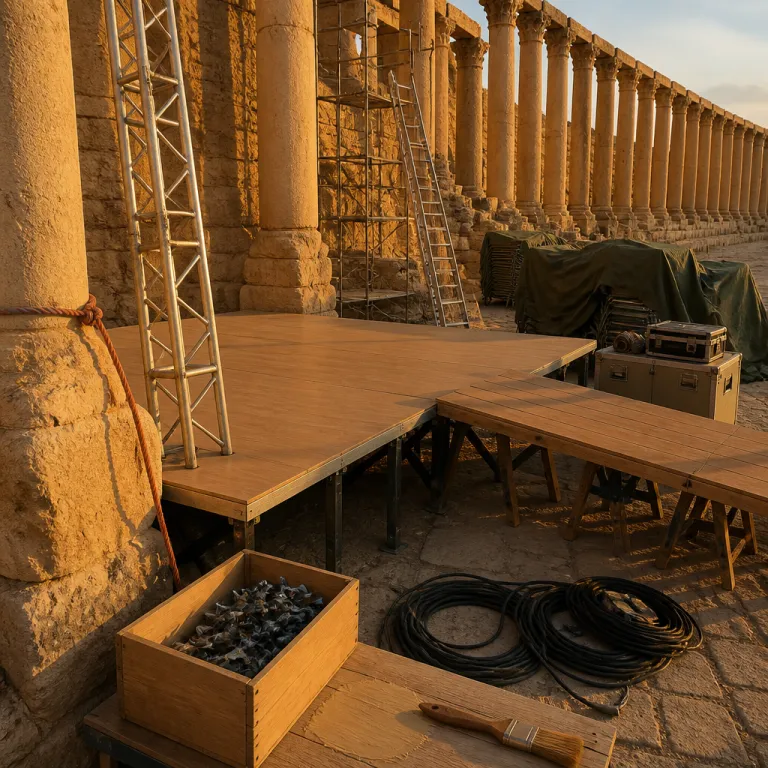
During the annual Jerash Festival of Culture and Arts, usually held in late July and early August according to the official festival programme, that transformation becomes literal, as live performances, light shows and guided tours animate the Roman venues after dark. Festival organisers describe it simply and clearly for first time visitors: “What is the Jerash Festival?” and “How can I purchase tickets?” sit alongside “Is the festival suitable for children?” and the answer is reassuringly direct: “Yes, it's family-friendly with activities for all ages.” Tickets are typically sold online through the official website and at on-site ticket booths, with prices varying by performance. When you plan a trip Amman around festival dates, you can time a visit so that your family hears music rise from the south theatre while the arch of Hadrian and surrounding ruins are illuminated.
Luxury hotels in Amman now understand that many guests want more than a rushed day trip, and concierges can arrange late return transfers or private drivers who wait while you explore into the evening. For a curated list of properties whose teams handle these logistics smoothly, our guide to refined hotel stays in Amman for discerning travelers is a reliable starting point. When your base in Jordan is well chosen, the best time to experience the Roman city of Jerash can stretch from late afternoon into night without feeling tiring for children.
Hadrian’s arch, theatres and the cardo maximus after the crowds
Standing beneath the monumental arch of Hadrian near the south gate in late light, you sense why many archaeologists call Jerash one of the best preserved Roman ruins in the Middle East. The arch was built to honour the emperor’s visit, yet at dusk it frames families taking quiet photographs rather than tour groups queuing for selfies. For parents, this is the best time to let children study the stonework and imagine Roman people arriving at the ancient city two millennia ago.
From there, stroll slowly along the cardo maximus, the main colonnaded street that once carried traders through the Roman city, and notice how the paving stones shine as the day cools. The oval plaza, sometimes compared to a kind of Pompeii Middle Eastern forum, feels almost theatrical when the sun drops and the surrounding columns catch the last light. If your Jerash Jordan visit coincides with a sound and light event, the same space becomes a literal stage, turning your family trip into a memory that rivals Petra by night or a quiet evening in Wadi Rum.
Official opening hours for the archaeological site are generally from around 8:00 to 16:00 in winter and 8:00 to 19:00 in summer, with last entry before closing; always confirm current times on the Jordan Tourism Board website or with your hotel, as schedules can change. Standard entry tickets for international visitors are usually in the range of 10–12 JOD, while holders of the Jordan Pass have admission included, but evening festivals or special performances may require separate tickets. Thinking this way helps you balance energy levels for children, alternating intense archaeological days with gentler afternoons in Amman or by a hotel pool, so that visiting after hours becomes a highlight rather than an exhausting add on.
Beyond a day trip: agritourism stays and Ajloun as a base
While many travellers still treat a Jerash Jordan visit as a simple day trip from Amman, a growing number of families are choosing to sleep in the cooler hills of the north. The countryside around Jerash and Ajloun is dotted with emerging agritourism lodges, where children can see olive groves, taste local honey and understand that the ancient city was once surrounded by fertile land. Staying here turns time among the ruins into part of a wider rural trip, rather than a single stop between Petra and Wadi Rum.
Ajloun Forest Reserve, with its well known Ajloun Forest Lodge, offers comfortable cabins and easy trails, making it an appealing base for two or three nights. From this vantage point in north Jordan, you can explore Jerash in the late afternoon, visit Ajloun Castle in the morning and still have time for relaxed meals and stargazing with children. The climate is often several degrees cooler than Amman, which means the best time for walking the Roman ruins or the forest paths often stretches longer into the day.
For families planning a multi stop trip Amman to Aqaba, our curated hotel guide to Jordan with a property map from Amman to Aqaba helps you position Jerash within a wider route. You might spend two nights in a luxury city hotel in Amman, two nights in Ajloun, then continue south to Petra and Wadi Rum, using the Jordan Pass to streamline entry to major sites. In this pattern, the ancient city becomes a gentle northern chapter, balancing the drama of Petra’s canyons and the silence of the desert with green hills and Roman theatres.
Designing a northern Jordan circuit for premium families
A thoughtful Jerash Jordan visit rarely stands alone, especially for families who value context and comfort as much as individual sites. The most rewarding itineraries link the Roman city of Jerash with Ajloun Castle and the hilltop ruins of Umm Qais, creating a northern Jordan circuit that feels coherent and manageable in driving time. Distances between these points are short by regional standards, which means less time in the car for children and more time walking through ruins or forests.
One elegant pattern is to start your trip Amman with two nights in a central luxury property, then head north for Jerash and Ajloun before looping back through the city en route to Petra and Wadi Rum. In this design, visiting Jerash in the late afternoon becomes your first deep encounter with Roman ruins, while Umm Qais, sometimes called a northern Pompeii Middle Eastern counterpart, offers sweeping views over the Jordan Valley and the Sea of Galilee. Because the climate in the north is milder, especially in shoulder seasons, the best time for outdoor exploration often extends into early evening, which suits families who prefer slower mornings.
Throughout this circuit, the Jordan Pass can simplify entry to multiple sites, but it remains your choice whether to add private guiding or curated experiences such as festival evenings in the south theatre or north theatre. Luxury and premium hotels in Amman and beyond can coordinate drivers, restaurant reservations and child friendly guides, turning a potentially complex route into a seamless trip. When planned with this level of care, a Jerash Jordan visit after hours becomes not just a stop on the way to Petra, but the moment when the ancient city truly becomes a stage for your family’s own story.
FAQ about planning a Jerash Jordan visit after hours
Is the Jerash Festival suitable for children and families ?
The Jerash Festival of Culture and Arts is designed as a family friendly event, with evening performances in the Roman ruins that appeal to different ages. Official information clearly states: “What is the Jerash Festival?” “How can I purchase tickets?” and “Is the festival suitable for children?” with the answer: “Yes, it's family-friendly with activities for all ages.” Parents should still choose seating away from the loudest speakers and bring a light jacket for the evening chill.
How much time should I plan for a Jerash Jordan visit ?
Most families should allow at least four to five hours inside the ancient city of Jerash, especially if they want to walk from Hadrian’s arch and the south gate through the oval plaza to the north theatre. If you aim to experience the site after the tour buses leave, consider arriving by mid afternoon and staying through sunset. This timing allows for a relaxed pace, photo stops and a possible early evening performance in the south theatre.
Can I visit Jerash as a day trip from Amman with children ?
Jerash lies about 50 kilometres north of Amman, and the drive usually takes under one hour each way, which makes a day trip very feasible for families. Many luxury hotels in the city can arrange private drivers who wait while you explore, allowing you to return to Amman after dark without stress. If your children handle longer days well, combining Jerash with a short stop at Ajloun Castle is also realistic.
Does the Jordan Pass cover entry to Jerash and nearby sites ?
The Jordan Pass typically includes entry to the main archaeological ruins of Jerash, as well as other major sites such as Petra, which can offer good value for multi site itineraries. It does not cover private guides, transport or special evening events like festival performances in the Roman theatres. Always check the latest official details before your trip, as inclusions and conditions can change over time.
What should I wear and bring for an evening visit to Jerash ?
Comfortable walking shoes are essential, because the cardo maximus and other Roman streets are paved with uneven stones that can be slippery in low light. For an evening Jerash Jordan visit, bring a light jacket, some water and perhaps a small torch or phone light to navigate darker sections safely with children. During festival nights or sound and light shows, follow local authority guidance on seating areas and movement within the ruins, and allow extra time for parking and security checks at the main gate.