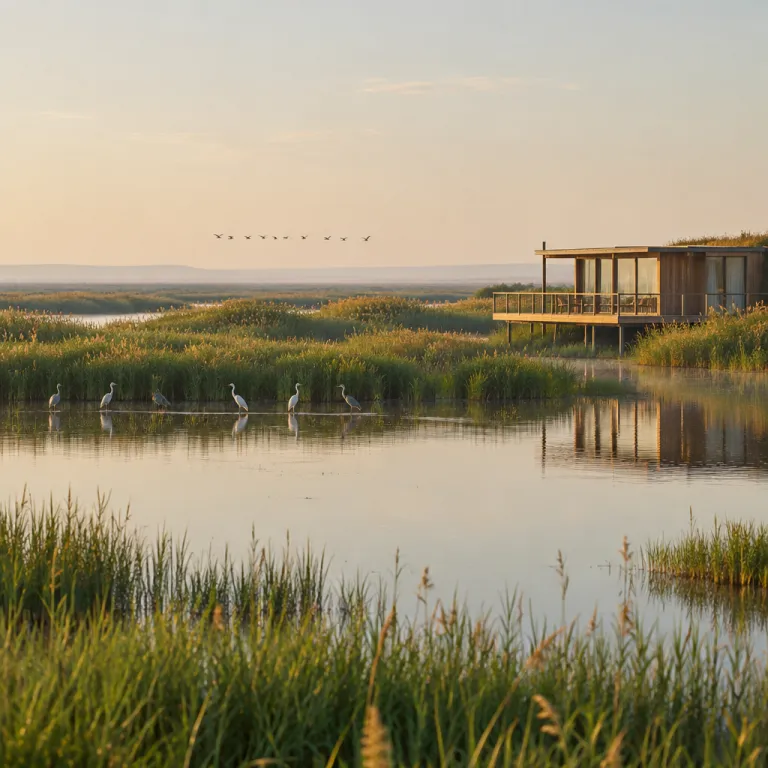
Azraq wetland bird watching in Jordan for post‑Petra travelers
Azraq Wetland in migration season feels like a whispered secret. For travelers who have already walked through Petra by candlelight and floated in the Dead Sea, bird watching at Azraq Wetland Reserve in Jordan offers a quieter form of luxury that is rooted in time, water and patience. The contrast between the surrounding desert and the sudden presence of water and birds is what will stay with you long after you leave.
The Azraq Wetland Reserve sits in eastern Jordan, around 100 kilometers and 75–90 minutes by road from Amman, in a basin that once formed a vast inland marsh fed by powerful springs connected to the wider Jordan River system. Today this wetland reserve is smaller yet intensely protected, a wildlife sanctuary managed by the Royal Society for the Conservation of Nature (RSCN) as one of the most important wetlands in the Middle East. When you walk the wooden marsh trail here, you are stepping into a rare pocket of nature where migratory birds still find refuge on their journey between continents.
Every autumn, hundreds of thousands of migratory birds funnel through this wetland, using Azraq as a staging post on the African–Eurasian flyway that links Europe, Asia and Africa. You may see a single bird lifting from the reeds, then suddenly notice entire flocks of bird species rising in waves, including raptors, waders and elegant greater flamingos (Phoenicopterus roseus). For visitors used to the drama of Petra’s canyons or the stillness of the Dead Sea, the view across these wetlands at sunrise offers a different kind of spectacle that feels both fragile and deeply resilient.
Migration season at Azraq: what you actually see on the marsh trail
Azraq wetland bird watching in Jordan is at its most rewarding between September and November, with peak passage often in October according to RSCN guides. During these months, the Azraq wetlands become a living map of movement, as migratory birds pause to rest and feed before crossing the open desert or the Mediterranean. The sense that this modest wetland reserve is part of a planetary system will change how you read every ripple on the water.
The main marsh trail is an easy, level boardwalk of roughly 1.5 to 2 kilometers, suitable for most visitors and ideal for solo travelers who prefer to move at their own pace. Bird hides along the trail allow you to sit quietly while bird species emerge from the reeds, including grey heron (Ardea cinerea), little egret (Egretta garzetta), black-winged stilt (Himantopus himantopus), plovers and, in good seasons, flamingos that paint the water with pale pink reflections. Raptors such as western marsh harrier (Circus aeruginosus) and steppe eagle (Aquila nipalensis) patrol the skies, while smaller migratory birds flicker through the tamarisk and reed beds in restless waves.
Guides at this wildlife reserve know the seasonal rhythms intimately and will help you interpret what you see, from the behavior of a single bird to the patterns of entire flocks. Many travelers combine a half day of bird watching here with a wider eastern desert circuit that includes Qasr Amra, a UNESCO World Heritage desert castle with extraordinary frescoes, and other heritage sites that reveal different layers of Jordan’s history. If you are planning a broader itinerary of unforgettable things to do in Jordan for luxury minded travelers, this quiet wetland reserve belongs alongside Petra, Wadi Rum and the Dead Sea on your personal map of essential stops.
From Amman to Azraq: how to plan a luxury‑minded day in the eastern desert
Reaching Azraq from Amman is straightforward, and the journey itself frames the experience. You leave the capital’s layered neighborhoods and head east into a desert that feels increasingly empty, passing low villages and occasional signs pointing toward Petra, the Dead Sea and other familiar names that remind you how compact Jordan really is. By the time you arrive at the wetland reserve located on the edge of the town of Azraq (approximately 31.833°N, 36.823°E), the presence of water feels almost improbable.
Most visitors treat Azraq wetland bird watching in Jordan as part of a full day loop that also takes in the desert castles. Qasr Amra, a short drive away, is a UNESCO heritage site whose interior frescoes show hunting scenes, zodiac signs and bathing figures, offering a rare secular view of early Islamic life in the Middle East. Nearby, Qasr Kharana rises from the flat desert like a mirage, while the basalt blocks of Azraq Castle, or Qasr al Azraq, recall the era when T. E. Lawrence used this fortress as a base during the Arab Revolt.
For independent travelers, hiring a private driver from Amman gives you the flexibility to time your wetland visit for early morning or late afternoon, when birds are most active and the light is soft. If you are walking sections of the Jordan Trail in luxury stages, with hotel stays each night, you can weave Azraq into a broader overland route that links Amman, the Jordan River valley, Petra and the Dead Sea. A Jordan Pass will cover entry to many heritage sites on this circuit, though you still pay a modest conservation fee at the wetland reserve and at nearby Shaumari Wildlife Reserve; check current opening hours and prices with the Royal Society for the Conservation of Nature before you travel.
Where to stay: Azraq Lodge, Amman hotels and the Shaumari wildlife connection
Choosing where to sleep shapes how you experience Azraq wetland bird watching in Jordan. Staying at Azraq Lodge, the eco property managed by the Royal Society for the Conservation of Nature, places you a short drive from the wetland reserve and the Shaumari Wildlife Reserve, where Arabian oryx (Oryx leucoryx) and other desert adapted species live in protected enclosures. The lodge itself is simple but atmospheric, converted from a former British military hospital, with long corridors, high ceilings and a sense of being embedded in the eastern desert rather than looking at it from afar.
For many luxury travelers, the trade off is between proximity and polish. Azraq Lodge offers clean, comfortable rooms, hearty local food and the priceless advantage of reaching the marsh trail at first light, when birds are most active and the water lies perfectly still. Returning to Amman for the night, by contrast, gives you access to high end hotels with extensive spa facilities, refined dining and easy connections onward to Petra, the Dead Sea or the Jordan River valley, but you will lose those quiet dawn and dusk hours at the wetland reserve.
One elegant solution is to spend a single night at Azraq Lodge to focus on bird watching and nature, then shift back to Amman for urban comfort and broader Jordan exploration. From the capital, you can continue toward wellness focused stays that highlight thermal springs and the wellness side of Jordan that is not only about the Dead Sea, using curated guides to choose properties that align with your values. Wherever you base yourself, remember that every night spent in or near reserve Jordan sites such as Azraq and Shaumari directly supports conservation work, from wetland restoration to the protection of Arabian oryx and other threatened species.
Sustainable luxury at Azraq: water, conservation and the future of Jordan’s wetlands
Azraq Wetland is a case study in how fragile water systems in the Middle East can be, and why sustainable travel matters. Decades of over pumping the aquifer that once fed this oasis left much of the wetland dry, turning former open water into cracked earth and leaving migratory birds with fewer safe resting points. The current wetland reserve is smaller than its historical footprint, yet it remains a critical water source and a living reminder that every visitor will influence its future.
When you pay your entrance fee for Azraq wetland bird watching in Jordan, you are contributing directly to the Royal Society for the Conservation of Nature’s restoration work. This includes pumping water back into key pools, managing reeds to maintain open water for bird species and monitoring migratory birds that depend on this stopover between Europe, Asia and Africa, as documented in RSCN conservation reports. Linked projects at Shaumari Wildlife Reserve, where Arabian oryx have been reintroduced to the desert, show how a network of protected areas can anchor a more resilient Jordan in the face of climate stress.
For luxury travelers, the real indulgence here is not a marble lobby but the chance to sit in a hide on the marsh trail and feel the wetland breathing around you. You look out across the water and reeds, aware that Petra’s carved façades, the Dead Sea’s mineral shores and the Jordan River valley are all part of the same national story of scarcity, ingenuity and adaptation. Choosing low impact transport, staying in properties that support reserve Azraq and other heritage sites, and using tools such as the Jordan Pass to structure longer, slower trips will help ensure that future visitors can still watch birds rise from this wetland at dawn.
FAQ
Is Azraq Wetland worth visiting if I have already seen Petra and Wadi Rum ?
Azraq Wetland is absolutely worth visiting after Petra and Wadi Rum because it offers a completely different side of Jordan. Instead of canyons and rock, you experience water, reeds and migratory birds in a protected wildlife reserve. The contrast between the desert surroundings and the wetland itself makes Azraq wetland bird watching in Jordan a memorable, complementary experience.
How long should I plan for a visit to Azraq Wetland Reserve ?
A focused visit to the wetland reserve usually takes three to four hours, including time on the marsh trail and in the bird hides. Many visitors combine this with a stop at Qasr Amra and other desert castles, turning the day into a full eastern desert circuit from Amman. If you are a keen bird watcher or photographer, consider staying overnight nearby to enjoy both sunrise and sunset light on the wetlands.
Do I need a guide for bird watching at Azraq Wetland ?
You can walk the main trail independently, but hiring a local guide significantly enriches the experience. Guides know where specific bird species tend to feed or rest and can help you interpret behavior, seasonal changes and the broader conservation story. For serious bird watchers, a guide also increases the chances of spotting rarer migratory birds during peak season.
Can I visit both Azraq Wetland and Shaumari Wildlife Reserve in one day ?
Visiting both reserves in a single day is realistic, especially if you start early from Amman with a private driver. A typical itinerary includes morning bird watching at the wetland reserve, followed by an afternoon game drive or guided visit at Shaumari Wildlife Reserve to see Arabian oryx and other desert wildlife. This combination gives you a rounded view of how reserve Jordan sites are protecting both water dependent and desert adapted species.
Is the Jordan Pass valid for Azraq Wetland and the desert castles ?
The Jordan Pass covers entry to many major heritage sites, including Petra and several desert castles such as Qasr Amra, which is listed as a UNESCO heritage site. However, the pass does not usually include the conservation fees for Azraq Wetland Reserve or Shaumari Wildlife Reserve, which are paid separately on arrival. It is still worthwhile for most visitors, as it simplifies entry to multiple sites across Jordan and can reduce overall trip costs.