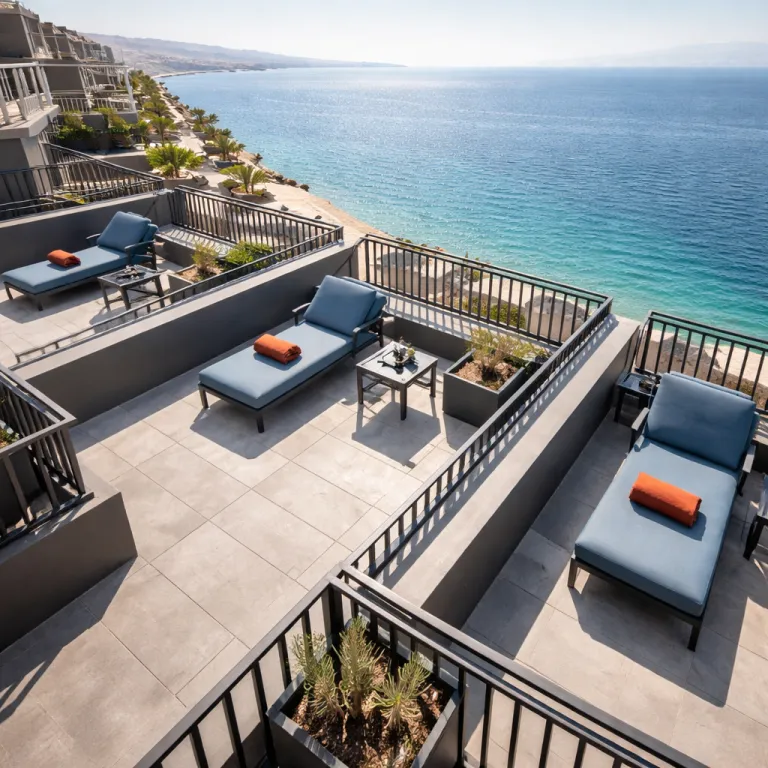
From one-night stopover to strategic Aqaba luxury stay
For years, most Jordan itineraries treated Aqaba as a perfunctory night stay before an early flight from King Hussein International Airport. That model no longer matches the reality on the ground, because the city’s luxury hotel landscape has matured into a coherent Red Sea leisure hub that rewards at least a three-night Aqaba luxury stay for business travelers extending work trips. Today, the question is not whether to check into an Aqaba hotel at all, but how to structure your rooms, your time and your budget so that Aqaba becomes the pivot of your Jordan journey rather than its footnote.
The shift starts with supply depth along the coast, where Westin Saraya Aqaba and Al Manara, a Luxury Collection Hotel, anchor a growing cluster of private properties that finally justify the term luxury hotel in Aqaba, Jordan. Around these flag addresses, a dozen smaller high-end hotel options now line the main Street Aqaba corridor and the newer marina area, giving hotel guests meaningful choice in room category, suite configuration, view orientation and price point. This density means you can check time-sensitive meeting schedules in Amman, then confidently plan a three-night stay in Aqaba knowing that the front desk standards, daily housekeeping routines and service culture now match what you expect from a serious five-star site.
Location is the second structural change, because the main resort area sits within a compact urban grid that keeps transfers short and logistics simple. From most properties you can walk from your room to the beach in minutes, or reach the marina, cafés and the historic fort area by a short car hire transfer, which matters when you are compressing leisure into a tight post-conference window. Aqaba’s tourism authorities summarise the new proposition clearly: “Aqaba’s three-night stay offers a balanced mix of relaxation and adventure,” a message echoed in recent visitor campaigns and official itineraries.
For the executive traveler, this compactness translates into time efficiency, the most valuable luxury of all. You can land at King Hussein International, check into your chosen luxury hotel, confirm your check time with the front desk and still be in the sea before sunset on day one. Over three nights, that rhythm allows a calibrated mix of Red Sea leisure, fitness sessions, outdoor dining and targeted excursions that a single night stay could never support, especially when airport transfers typically take only about 15–20 minutes door to door according to published local transport estimates.
How Westin Saraya and Al Manara rewrote the coastal rulebook
Walk into the lobby at Al Manara and you immediately sense why Aqaba’s coastal narrative has changed. This is not a generic resort; it is a property where the architecture, the room layouts and the service choreography have been designed for guests who understand the difference between a standard hotel and a true luxury hotel. The suites and rooms frame the Red Sea with deliberate precision, so that even partial sea view categories feel intentional rather than compromised, a design approach highlighted in the hotel’s own room descriptions and image galleries.
Westin Saraya, a short stroll away in the same area, plays a complementary role by leaning into wellness, fitness and business-leisure flexibility. Here, the pool design, the kids pool zoning and the outdoor terrace sequence allow a family to enjoy a relaxed beach day while an executive steps into a quiet room for calls, then returns to the private leisure rhythm without feeling exiled from the group. Both properties offer structured daily housekeeping, reliable free WiFi and thoughtful front desk teams who understand late check time requests, early departures and the realities of regional flight patterns into Aqaba, Jordan, as reflected in their published amenity lists and guest reviews.
Crucially, these flag hotels did not emerge in isolation; they catalysed a wave of private developments along the coast that now fill in the gaps between ultra-luxury and midscale. You will find smaller properties with intimate pools, efficient parking layouts and a mix of suite and room categories that appeal to travelers who want a refined Aqaba luxury stay without always paying flagship rates. For those who prefer even more seclusion, the rise of high-end villas and residences around Aqaba and the wider Red Sea coast mirrors the trend documented in guides to private villas for rent in Jordan with elegance, comfort and exclusivity, and the same logic applies here; you can now calibrate privacy, service and budget with far greater nuance.
This ecosystem matters because it creates a genuine destination rather than a single-property island. When a dozen hotels in the same area share a commitment to service, outdoor space quality, clear privacy policy communication and multilingual support including English, عربي, español, français, the guest experience compounds over a three-night stay. As one recent guest put it in a verified review, “We stayed three nights, worked from the terrace in the mornings and explored a different part of the city every afternoon—Aqaba felt like a base, not a layover.” You can dine at one site, attend a small conference at another, then retreat to your own room or suite, using car hire or short walks along Street Aqaba, without ever feeling that you have exhausted the local inventory or run out of credible options.
Why three nights in Aqaba now outperform the old one-night model
The traditional Jordan circuit pushed travelers from Amman to Petra, then Wadi Rum, then a perfunctory night in Aqaba before flying out, which made the Red Sea feel like an afterthought rather than a destination. That pattern ignored the simple fact that Aqaba concentrates beaches, historical sites and marine activities within a compact radius, making it uniquely efficient for a three-night Aqaba luxury stay that blends leisure and light exploration. When you stretch your stay, each day can carry a distinct theme without sacrificing rest or work obligations, and you can match each block of time to realistic transfer and activity windows.
On day one, most executive travelers will want to check into their chosen Aqaba hotel, drop bags in the room and head straight to the sea. With average daily temperatures around 30 °C in late spring, based on long-term climate normals from the Jordan Meteorological Department, the pool and private beach zones at Westin Saraya, Al Manara and their peers become natural extensions of the lobby, and the best properties manage sun, shade and kids pool placement with almost urban-planning precision. Free WiFi coverage across outdoor decks means you can clear emails from a shaded cabana, then step into the Red Sea for a quick swim before sunset, turning what used to be dead transit time into meaningful leisure, with only a short walk back to your room to change for dinner.
Day two is where Aqaba’s compact geography really pays off, because you can move from history to water sports without long transfers. A morning walk through the old town and fort area, followed by a café stop along Street Aqaba, gives you a sense of the city’s lived texture before you return to the hotel for a late-morning fitness session or spa treatment. After lunch, a short boat ride from the marina takes you over coral gardens where dive operators now run both scuba and glass-bottom excursions, and resources like Jordan hotels in Aqaba for refined Red Sea stays can help you match specific hotel offers to your preferred level of marine immersion and to reputable PADI-certified partners.
By day three, the logic of a longer night stay becomes obvious, because you can finally integrate Wadi Rum or even Petra without feeling rushed. A dawn departure to the desert, followed by a late-afternoon return to your luxury hotel, allows you to close the day with a quiet drink on your balcony, watching the last light fade over the sea while daily housekeeping resets the room for departure. That final evening, with bags packed, boarding passes checked and car hire confirmed for the short transfer to King Hussein International, you will understand why the one-night model now feels like a missed opportunity rather than a smart itinerary move, especially when most desert excursions run 4–6 hours and fit neatly into a three-night framework.
Dead Sea versus Aqaba, heat realities and how to book smarter
Some travelers will argue that the Dead Sea still deserves those extra nights instead of Aqaba, especially for wellness-focused itineraries. They are not wrong about the mineral-rich water and spa infrastructure, but for the business-leisure executive who wants a mix of meetings, leisure and light adventure, a three-night Aqaba luxury stay usually delivers a better balance of experiences per hour on the ground. The Red Sea adds marine life, urban texture and flexible dining to the equation, while the Dead Sea excels at stillness and spa rituals, so the decision often comes down to whether you value variety or deep rest.
Heat is the honest counterpoint, because from June onwards Aqaba’s temperatures climb and the outdoor rhythm shifts. The best properties respond with shaded pool design, efficient indoor-outdoor transitions, late-evening beach access and strong fitness facilities so that guests can move workouts indoors when the sun is at its peak. If you plan a summer night stay, prioritise hotels with generous indoor public rooms, reliable air conditioning, thoughtful kids pool shading and a private beach layout that keeps loungers close to the water, then check time slots for activities early so you can secure morning or twilight excursions and avoid the harshest midday sun.
Flight logistics are the other structural consideration, since King Hussein International is a smaller hub than Queen Alia in Amman, with fewer direct connections. That reality makes it even more important to align your hotel booking, car hire arrangements, pets allowed policies and front desk support with your flight schedule, especially if you are combining Aqaba, Jordan with regional business travel. A well-run luxury hotel will help you check airline updates, arrange transfers, clarify parking options if you are driving yourself and ensure that your privacy policy questions, language needs such as español, français or other support, and any special requests are handled before you arrive.
When you book through a curated platform such as resort collections that define coastal, desert and Dead Sea luxury in Jordan, you gain an extra layer of quality control over these variables. Look for properties that state clearly whether pets are allowed, how free WiFi is managed across rooms and outdoor areas, and what kind of private beach access is included in each room or suite category. In a city where the Aqaba Tourism Board, local tour operators and hotel partners now coordinate integrated itineraries, the smartest move is no longer to rush through, but to commit to three nights and let the Red Sea, the city streets and the hotel teams do their work.
Key figures that support a three-night Aqaba itinerary
- Aqaba welcomes on the order of several hundred thousand visitors each year according to the Aqaba Special Economic Zone Authority and local tourism reports, a volume that underpins the business case for sustained investment in luxury hotel infrastructure and services; readers should verify the latest figures via the authority’s annual tourism statistics.
- The average daily temperature in late spring sits near 30 °C based on Jordan Meteorological Department climate summaries for the Gulf of Aqaba region, which makes pool design, shaded outdoor areas and private beach access critical factors when choosing where to stay; always check the latest monthly climate tables before you book.
- Local tourism authorities promote a three-night framework built around beaches, historical sites and water sports, aligning with integrated packages that structure day one for relaxation, day two for culture and day three for marine leisure, a pattern reflected in sample itineraries on official Aqaba and Jordan tourism portals.
- Rising interest in eco-tourism and adventure sports in Aqaba has encouraged more operators to add diving, snorkeling and desert excursions, increasing the range of activities that can be realistically enjoyed during a three-night stay and making it easier to bundle half-day trips with work commitments.
- The city’s compact coordinates around 29.5 ° N and 35.0 ° E, as indicated on standard geographic references, mean that most major hotels, the marina, the old town and the main beach area sit within a short drive, maximising usable leisure time for business travelers on tight schedules and keeping typical in-city transfers under about 15 minutes.