Jordan country tourist attractions for luxury minded travelers
Jordan country tourist attractions combine ancient heritage with refined hospitality. In this compact destination, you can move from a lively city like Amman to silent desert landscapes and the Dead Sea in a single day. For travelers booking premium hotels, this contrast creates a rare blend of comfort, culture, and soft adventure.
Set in the heart of the Middle East, Jordan offers easy access from Europe, the Gulf, and Saudi Arabia, which makes it ideal for short luxury escapes or extended journeys. The Jordan Tourism Board works with international tour operators and local businesses to promote Jordan’s main visitor highlights, using digital marketing and virtual reality tours to showcase real experiences. According to recent figures from the Jordan Tourism Board and World Bank, the country has welcomed around five million visitors in peak years, underlining its reputation for safety and high service standards.
When you visit Jordan, you move through layers of history, from Roman ruins in Jerash to Crusader era fortresses and Islamic desert castles. Many of these heritage sites sit close to five star properties, so you can explore archaeological treasures by day and return to spa suites and fine dining at night. In Amman, for example, it is common to end an afternoon at the Citadel with sunset views from a rooftop bar, listening to the call to prayer echo across the hills before heading to a tasting menu dinner.
Key Jordan country tourist attractions include Petra, Wadi Rum, the Dead Sea, Aqaba on the Red Sea, and the highlands around Mount Nebo and Umm Qais. Each region offers a different mood, from Wadi Rum’s vast silence to the buoyant waters of the Dead Sea at the lowest land elevation on Earth. Choosing the right luxury hotel in each area shapes how you experience the country, especially if you want seamless transfers, expert guides, and flexible check in and check out times.
For travelers focused on comfort, the main decision is how to divide nights between Amman, Petra, Wadi Rum, the Dead Sea, and Aqaba. Amman, the capital city, works as a practical base for the archaeological museum, the Jordan Museum, and day trips to Jerash, Madaba, Mount Nebo, and the nearby desert castles. From here, private drivers can take you along the Jordan River valley or the King’s Highway, linking many of the most important heritage sites in one elegant route.
Petra adventures and luxury stays around the rose red city
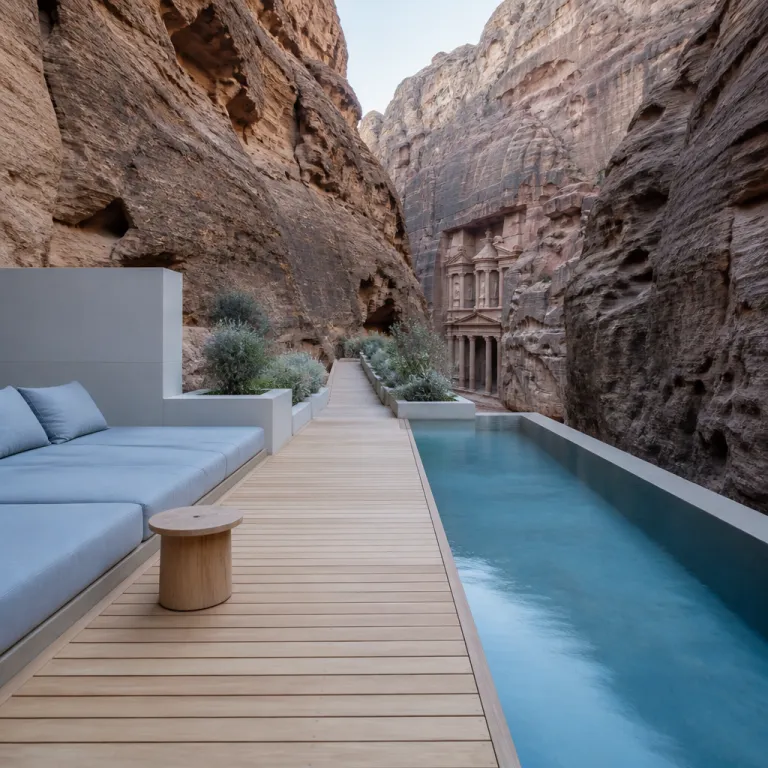
Petra is the centerpiece of Jordan country tourist attractions and a highlight of any luxury itinerary. This Nabataean city of carved sandstone façades, tombs, and ruins rewards travelers who plan their hotel choice and timing with care. High end properties near the Petra visitor center allow early access, late returns, and easy breaks during the heat of the day.
Most premium travelers choose hotels in Wadi Musa, the modern town beside Petra, to stay within walking distance or a short transfer from the Siq entrance. Flagship options such as the Mövenpick Resort Petra or the Petra Marriott Hotel place you close to the gate while still offering full spa facilities and rooftop or terrace dining. With a flexible schedule, you can enjoy the Treasury at quieter moments, then retreat to your suite for treatments, private dining, or a swim.
For those planning a refined Petra adventure, timing is everything, and crowd patterns matter. Many guests now use detailed guides such as this resource on how to time your visit to Petra around the crowds to decide when to enter the site. Combining that knowledge with a hotel that offers early breakfasts, late dinners, and flexible concierge support turns a standard visit into a tailored experience.
Within Petra itself, luxury travelers often hire licensed private guides who can interpret the Treasury, the Royal Tombs, and the High Place of Sacrifice. Respecting local customs and using licensed tour guides is strongly encouraged by the Jordan Tourism Board, both for safety and for preserving the heritage site. One Petra based guide, for instance, likes to pause in a shaded corner of the Siq just after sunrise so guests can watch the first light touch the Treasury while the canyon is still almost silent.
Many itineraries pair Petra with nearby attractions such as Little Petra, Wadi Rum, and the Dead Sea, so your hotel booking strategy should consider the full route. A two or three day stay near Petra allows time for a day trip to lesser known ruins or a sunset hike above the city, followed by a transfer to Wadi Rum or the Dead Sea. When you book through a specialized luxury platform, you can often secure combined packages that include private transfers, curated meals, and access to exclusive viewpoints inside the archaeological park.
Petra by night, Wadi Rum, and desert luxury for discerning guests
Many Jordan country tourist attractions reveal a different character after dark, and Petra is no exception. Petra by night, with candlelit paths through the Siq and music in front of the Treasury, has become a signature experience for travelers staying in nearby luxury hotels. To enjoy it comfortably, you need a property that offers late night room service, secure transfers, and quiet rooms for a restful sleep afterward.
For a deeper understanding of the site, some travelers combine Petra by night with a carefully paced daytime exploration and a second evening visit. Resources such as this elegant guide to experiencing Petra at night in luxury help you decide how many nights to book and which services to prioritize. When your hotel concierge coordinates ticketing, timing, and private guiding, you can focus on the atmosphere rather than logistics.
Beyond Petra, Wadi Rum is another essential part of Jordan’s tourism landscape, especially for travelers who appreciate design driven desert camps. This protected valley offers Martian like sandstone mountains, vast sand plains, and star filled skies that feel far removed from the city. Luxury camps here feature en suite tents or domes, fine dining, and curated excursions by 4x4, camel, or on foot.
Choosing between Wadi Rum and other desert areas depends on how immersive you want your stay to be. Wadi Rum is the most famous desert reserve in the country, with dramatic cliffs and a strong Bedouin presence, while smaller wadis and desert castles near Amman offer shorter day trip options. Many guests recall sitting by a campfire in Wadi Rum, sipping sweet tea as the sky turns from deep blue to black and the Milky Way appears above the sandstone peaks.
From a logistics perspective, Wadi Rum sits within driving distance of both Petra and Aqaba on the Red Sea, which simplifies routing. You can travel from Petra to Wadi Rum in a few hours, enjoy a night under the stars, then continue to Aqaba for sea based activities and premium beachfront hotels. A typical loop might run Amman–Petra (about three hours), Petra–Wadi Rum (around two hours), and Wadi Rum–Aqaba (roughly one hour), forming a core circuit for luxury travelers who want to experience Jordan country tourist attractions without long internal flights.
Dead Sea, Aqaba, and coastal desert retreats
The Dead Sea and Aqaba represent the aquatic side of Jordan country tourist attractions, balancing the arid beauty of Petra and Wadi Rum. At the Dead Sea, luxury resorts line the shore at the lowest natural sea level on Earth, offering mineral rich mud treatments and expansive spa facilities. These properties are ideal for guests who want to float in the dense, salty water by day and enjoy refined dining in the evening.
Many travelers pair a stay at the Dead Sea with visits to nearby heritage sites such as Mount Nebo, the baptism sites along the Jordan River, and the mosaics of Madaba. From a premium hotel base, you can arrange a private day trip that includes these locations, returning in time for sunset views over the water and the distant hills of the West Bank. The combination of spiritual history, wellness focused resorts, and easy access from Amman makes this shoreline a cornerstone of many itineraries.
Farther south, Aqaba offers access to the Red Sea, coral reefs, and a growing portfolio of upscale beach resorts. Here, Jordan’s coastal attractions shift from ruins and desert to snorkeling, diving, and yacht charters, all supported by modern marinas and waterfront promenades. Aqaba also serves as a gateway for travelers arriving from Saudi Arabia by land, who may then continue to Petra, Wadi Rum, or the Dead Sea.
For guests who want to experience both coastal and desert luxury, curated itineraries often link Aqaba with Wadi Rum and Petra in a smooth loop. Platforms specializing in high end stays, such as those highlighted in this overview of resorts that define coastal, desert, and Dead Sea luxury in Jordan, help travelers compare properties across regions. This makes it easier to balance time between the Red Sea, Wadi Rum, and the mineral rich shores of the Dead Sea.
When planning your nights, consider how many full days you want at each body of water. A typical pattern is two nights at the Dead Sea for spa treatments and relaxation, followed by two or three nights in Aqaba for Red Sea activities and city dining. This structure leaves enough time for Petra, Wadi Rum, and Amman while still allowing unhurried mornings and long, leisurely dinners by the sea.
Amman, Jerash, desert castles, and northern heritage sites
Amman is more than a transit point; it is a key part of Jordan country tourist attractions for travelers who appreciate urban comfort and historical depth. The city offers a mix of international luxury hotels and refined local properties, many with panoramic views over its hills and valleys. From these bases, you can explore the Citadel, the Roman Theater, and contemporary galleries before returning to rooftop lounges and spa facilities.
One of the most rewarding day trips from Amman is Jerash, home to some of the best preserved Roman ruins in the Middle East. Walking along its colonnaded streets, you can see temples, theaters, and plazas that rival more famous sites elsewhere, yet remain relatively uncrowded. Many luxury travelers arrange private transfers and guides through their hotels, allowing them to explore Jerash at their own pace and return to Amman for evening dining.
The northern region also includes Umm Qais, where ruins overlook the Jordan River valley and the Golan Heights, offering sweeping views and a quieter atmosphere. Nearby, Mount Nebo holds religious significance and panoramic vistas, making it another essential stop among Jordan country tourist attractions. Both sites can be combined into a single day trip from Amman, especially when coordinated through a hotel concierge who understands traffic patterns and opening hours.
East of the capital, the desert castles form a chain of early Islamic structures scattered across the steppe. These desert castles, including Qasr Amra and Qasr Kharana, showcase frescoes, baths, and unique architecture that appeal to travelers interested in early Islamic art and history. Because they are spread out, a private driver or organized tour arranged by your hotel is the most comfortable way to visit several in one day.
Amman also houses important cultural institutions such as the Jordan Museum and the archaeological museum at the Citadel, both of which help contextualize the ruins you see across the country. Spending at least two nights in the city allows time to explore these collections, enjoy contemporary dining, and adjust to local customs before heading to Petra or the Dead Sea. For many guests, starting in Amman provides a gentle introduction to Jordan’s main tourist attractions and the rhythms of daily life in the capital.
Wadi Mujib, hot springs, reserves, and practical planning for luxury stays
Beyond the headline sites, Jordan country tourist attractions include nature reserves, canyons, and hot springs that lend themselves to tailored, high comfort adventures. Wadi Mujib, a dramatic gorge that feeds into the Dead Sea, offers guided canyoning routes suitable for active travelers who still want to return to a spa resort at night. Nearby, hot springs such as those at Ma’in provide thermal pools and waterfall fed baths framed by rugged cliffs.
Many of these areas fall within or near protected reserves managed to balance tourism with conservation. When you stay at eco conscious lodges or partner hotels, you support efforts to preserve local flora, fauna, and water resources while enjoying guided hikes and stargazing. This approach reflects a broader rise in eco tourism within Jordan’s travel sector, where visitors seek both comfort and responsible practices.
Planning a luxury focused itinerary requires attention to distances, driving times, and the sequence of heritage sites. Because the country is relatively compact, you can link Petra, Wadi Rum, the Dead Sea, Wadi Mujib, and Amman in a week without feeling rushed, especially if you use private transfers. Many travelers choose to end their journey at the Dead Sea or Aqaba, where sea views and spa treatments provide a restful finale.
Safety and logistics are central to the appeal of Jordan country tourist attractions for high end visitors. Jordan is widely regarded as safe for tourists with a stable political environment, and many nationalities can obtain a visa on arrival; check with the Jordanian embassy or official tourism channels for current rules. Spring and autumn offer the most pleasant weather, especially for outdoor activities in the desert and wadis, while summer suits those who prioritize poolside relaxation.
When comparing booking platforms, look for transparent cancellation policies, clear room descriptions, and partnerships with licensed guides and drivers. The Jordan Tourism Board emphasizes three simple guidelines for visitors: “Respect local customs. Stay hydrated in desert areas. Use licensed tour guides.” By following this advice and choosing hotels that align with your expectations, you can experience Jordan’s key attractions in comfort while contributing to the preservation of its heritage sites and natural landscapes.
Key figures on tourism and jordan country tourist attractions
- Jordan receives around 5,000,000 tourist arrivals per year in strong years according to recent data from the Jordan Tourism Board and World Bank, a scale that supports a mature luxury hotel market while still avoiding the overcrowding seen in some neighboring destinations.
- Tourism revenue is estimated at about 4,000,000,000 USD annually in pre pandemic and recovery years, which makes travel and hospitality a central pillar of the national economy and encourages continuous investment in high end properties near Petra, the Dead Sea, and Aqaba.
- The Dead Sea shoreline in Jordan lies at more than 400 metres below global sea level, giving luxury resorts there a unique wellness positioning based on mineral rich waters and a distinctive microclimate.
- Jordan’s portfolio of UNESCO heritage sites, including Petra, Wadi Rum, and Quseir Amra among the desert castles, anchors many premium itineraries that combine cultural exploration with five star stays.
- Post pandemic tourism strategies focus on digital marketing, collaborations with travel agencies, and virtual reality tours of major attractions, which help international travelers research Jordan country tourist attractions and compare luxury hotels before booking.
Frequently asked questions about luxury travel and jordan country tourist attractions
What is the best time to visit Jordan for luxury travel ?
Spring from March to May and autumn from September to November offer the most pleasant temperatures for exploring Petra, Wadi Rum, and Amman while still enjoying poolside time at the Dead Sea or Aqaba. These seasons suit travelers who want to combine outdoor activities with spa treatments and fine dining. High end hotels often run targeted offers in shoulder periods, which can enhance value without sacrificing comfort.
Is Jordan safe for high end tourists staying in luxury hotels ?
Yes, Jordan is considered safe for tourists with a stable political environment, and this stability underpins the growth of premium properties across the country. Major areas such as Amman, Petra, the Dead Sea, Wadi Rum, and Aqaba maintain strong security measures and well regulated tourism services. As always, booking through reputable platforms and using licensed guides and drivers further enhances peace of mind.
Do I need a visa to visit Jordan for a luxury holiday ?
Many nationalities can obtain a visa on arrival; check with the Jordanian embassy for the latest rules that apply to your passport. Some travelers choose to purchase the Jordan Pass, which combines visa fees with entry to key heritage sites such as Petra and Jerash. Luxury travel advisors and hotel concierges can often clarify current requirements and help streamline your arrival.
How many days should I plan for Petra, Wadi Rum, and the Dead Sea ?
A balanced luxury itinerary usually includes at least two nights near Petra, one or two nights in Wadi Rum, and two or three nights at the Dead Sea or Aqaba. This schedule allows time for unhurried visits to the main heritage sites, spa sessions, and relaxed meals without constant packing and unpacking. Travelers with more time can add Amman, Jerash, Umm Qais, and the desert castles for a broader view of Jordan country tourist attractions.
Should I book hotels independently or through a specialized luxury platform ?
Independent booking works well if you already know the regions and properties you prefer, while specialized luxury platforms often provide added value such as upgrades, late check out, and curated experiences. For complex itineraries that link Petra, Wadi Rum, the Dead Sea, Wadi Mujib, and Aqaba, a platform or advisor with deep local knowledge can coordinate transfers and guides more efficiently. Either way, prioritize hotels with strong guest reviews, clear sustainability practices, and established relationships with licensed tour providers.
References and further reading
- Jordan Tourism Board – official information on attractions, safety, and travel regulations.
- UNESCO World Heritage Centre – listings and descriptions of Jordan’s World Heritage Sites.
- World Bank and national tourism reports – data on tourism’s economic impact in Jordan.