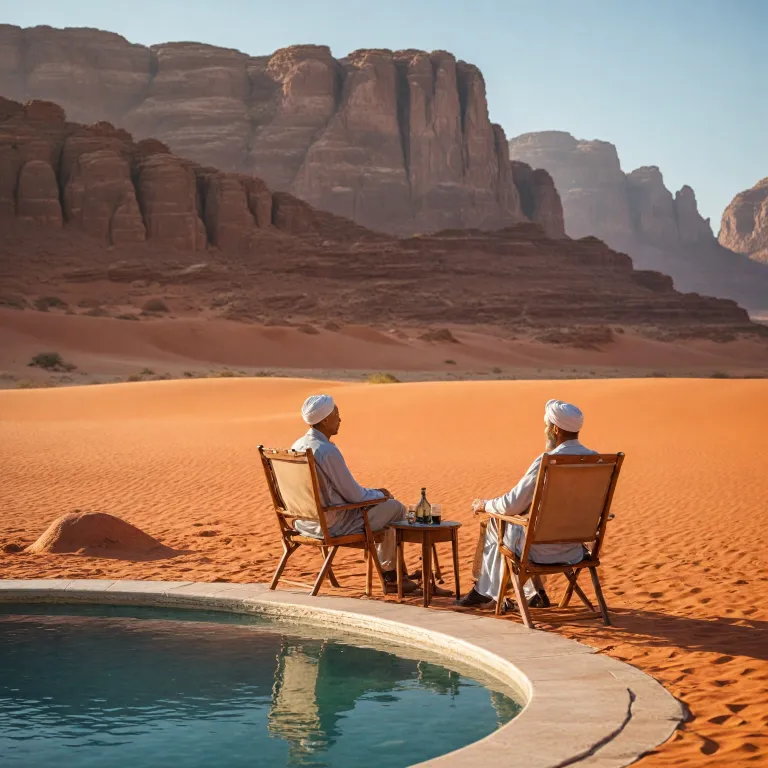
Luxury perspectives on wadi rum national park for discerning travelers
Wadi rum national park offers a rare blend of raw desert drama and refined hospitality. In this protected area of southern Jordan, luxury and premium stays sit quietly among red sand dunes, sculpted rock formations, and the vast rum desert sky. Travelers planning a high end escape can pair a stay here with time in Petra, Aqaba, and the Dead Sea for a complete Jordan journey.
The area is managed today by the Aqaba Special Economic Zone Authority, which continues the conservation work first structured by the Royal Society for the Conservation of Nature. This governance helps ensure that every jeep tour, camel ride, or guided canyon walk respects the fragile desert ecosystem and the cultural heritage of the Bedouin communities. For guests booking luxury hotels across Jordan, this means experiences in Wadi Rum, Petra, and along the Jordan Trail can be curated with confidence and environmental awareness.
Wadi Rum, often called the Valley of the Moon, stretches across 74,200 hectares of protected area, with rum village as the main gateway. Within this national park, visitors encounter towering rock walls, natural rock bridge formations such as the famous Burdah rock bridge, and narrow wadi corridors carved by ancient water. Many travelers place a night under the stars in rum valley on their bucket list, combining it with a day trip from Aqaba or Petra Wadi, or as part of a longer rum Wadi and Dead Sea itinerary.
Understanding the protected area and its cultural guardians
The heart of wadi rum national park is not only its desert scenery but also its people. The Zalabieh tribe, a Bedouin community rooted in rum village and the wider rum valley, plays a central role in eco adventure tourism and cultural preservation. Their presence ensures that every jeep tour, camel excursion, and guided hike through the canyon and rock formations carries authentic stories and traditions.
Conservation here began when Wadi Rum was identified as a potential nature reserve, later formalized as a protected area to safeguard its desert landscapes and archaeological wealth. Today, more than 25,000 petroglyphs and 20,000 inscriptions are recorded, etched into rock faces that line the wadi corridors and high cliffs. These inscriptions trace human travel routes between Petra, Aqaba, and the Dead Sea, revealing how this rum desert area once channeled caravans and water dependent communities.
Local Bedouin guides integrate traditional knowledge with modern safety and hospitality standards, which is particularly valuable for luxury and premium guests. They know where rare water sources lie, how to navigate the rum desert in shifting light, and the best places to pause for sunset over red sand. When planning a high end stay in Jordan, travelers can request curated tours that link Wadi Rum with Petra Wadi, the Jordan Trail, and coastal experiences near Aqaba and the Red Sea.
Designing a luxury itinerary around wadi rum national park
For travelers using a luxury and premium hotel booking website in Jordan, wadi rum national park becomes a central anchor in a wider itinerary. Many guests begin with a refined city stay in Amman, then continue south to Petra, Wadi Rum, Aqaba, and finally the Dead Sea. This sequence allows time Wadi to be framed between archaeological immersion in Petra Wadi and restorative spa days by the mineral rich sea.
Within the national park, premium desert lodges and elevated Bedouin style camps offer en suite tents, fine dining, and curated stargazing. Guests can arrange private jeep tours across the rum desert, stopping at key rock formations, narrow canyon passages, and panoramic viewpoints over rum valley. A tailored day trip might include a visit to a natural rock bridge, a walk among ancient inscriptions, and a sunset dinner on red sand dunes.
From Aqaba, Wadi Rum is an accessible day trip or overnight escape, ideal for travelers arriving by sea or through the nearby airport. Many luxury itineraries combine snorkeling in the Red Sea with a jeep tour in the rum Wadi landscapes, followed by a transfer to Petra or the Dead Sea. When booking online, look for properties and tours that clearly reference the protected area status, work with Bedouin partners, and align with sustainable travel principles across Jordan.
Signature experiences in the rum desert for premium guests
Within wadi rum national park, the most sought after experiences balance comfort, exclusivity, and a sense of place. A private jeep tour at first light lets guests cross the rum desert before the heat rises, tracing the soft curves of red sand and the sharp silhouettes of rock towers. Guides often pause at quiet places where the only sounds are wind over the wadi and the distant steps of camels.
Many visitors request routes linked to the stories of Lawrence of Arabia, whose time in this area has become part of local legend. Sites associated with Lawrence, including viewpoints and rock shelters, are often woven into longer tours that also highlight inscriptions and ancient water collection systems. These itineraries can be customized for luxury travelers who want slower pacing, shaded rest stops, and refined picnic setups among the rock formations.
Active guests may add guided hikes to natural arches such as the Burdah rock bridge, or sections of the Jordan Trail that cross the rum Wadi landscapes. Others prefer camel tours at sunset, followed by a return to camp for traditional Bedouin zarb dinners and professional stargazing sessions. Whether arriving from Petra, Aqaba, or the Dead Sea, many travelers leave feeling that a night in rum valley is an essential part of any Jordan bucket list journey.
Linking Wadi Rum with Petra, Aqaba, and the Dead Sea
Wadi rum national park sits strategically between Petra, Aqaba, and the Dead Sea, making it easy to integrate into a multi stop luxury itinerary. Many travelers choose to travel from Petra Wadi to rum village by private transfer, then continue onward to the Red Sea coast or the mineral rich shores of the Dead Sea. This route follows ancient caravan paths that once relied on scarce water sources hidden within the desert canyons.
From Aqaba, the short drive into the protected area allows guests to enjoy a jeep tour, sunset on red sand, and a night under the stars before returning to sea based activities. Some itineraries pair diving or snorkeling in the Red Sea with a rum desert overnight, then a transfer north to spa resorts overlooking the Dead Sea. Along the way, travelers can request stops at viewpoints, rock bridge formations, and key places associated with Lawrence and the wider history of Jordan.
For deeper planning inspiration, travelers can consult a dedicated luxury and premium hotel booking website in Jordan that curates stories and itineraries, such as travel stories and inspiration for discerning guests. These resources help align hotel choices in Petra, Aqaba, and the Dead Sea with tailored experiences in rum Wadi and the wider national park. By coordinating transfers, tours, and stays through a single platform, guests can ensure seamless movement across Jordan while maintaining a consistent standard of comfort.
Practical guidance for booking premium stays in Wadi Rum
When selecting accommodation around wadi rum national park, travelers should look beyond images and focus on operational details. Confirm whether the property lies inside the protected area or near rum village, as this affects access to sunrise and sunset viewpoints. Check how the camp or lodge manages water use, waste, and energy, since responsible practices are essential in a fragile desert environment.
Luxury and premium guests often value privacy, so it is wise to ask about tent spacing, noise levels, and the maximum number of guests per jeep tour. Clarify whether your stay includes guided excursions to key rock formations, canyon walks, and visits to sites linked with Lawrence of Arabia. Many high end operators offer private guides from the local Bedouin community, ensuring both cultural depth and flexible pacing across the rum desert.
Seasonality matters, as the best time Wadi for comfortable temperatures is generally spring and autumn, when days are warm and nights pleasantly cool. During hotter months, early morning and late afternoon jeep tours help guests avoid peak heat on the red sand and exposed rock. Whether combining Wadi Rum with Petra Wadi, Aqaba, or the Dead Sea, booking well in advance through a trusted Jordan focused platform ensures access to the most exclusive places and experiences.
Respecting heritage, sustainability, and local partnerships
Staying in or near wadi rum national park carries a responsibility to respect both nature and culture. The protected area status reflects decades of work to conserve the rum desert ecosystem, its rock formations, and the thousands of inscriptions that record human presence. Visitors can support this effort by following guidelines on waste, water use, and off road driving during every jeep tour or day trip.
Partnerships between the Aqaba Special Economic Zone Authority, the Jordanian Ministry of Tourism and Antiquities, UNESCO, and local Bedouin communities underpin sustainable tourism here. Innovation lies in combining traditional Bedouin knowledge of the wadi, water sources, and rum valley weather with modern conservation tools and visitor management. As tourism grows, especially among luxury and premium segments, these alliances help ensure that red sand dunes, rock bridge formations, and canyon habitats remain intact.
Travelers can contribute by choosing operators who employ local guides, respect the Jordan Trail routes, and limit group sizes in sensitive places. Many guests leave with a deeper appreciation of how the rum Wadi landscapes connect Petra, Aqaba, and the Dead Sea within a single national park narrative. "Visit during spring or fall for moderate temperatures., Engage local Bedouin guides for authentic experiences., Respect local customs and environmental guidelines."
Key statistics about Wadi Rum
- Total protected area of Wadi Rum : 74,200 hectares of desert landscapes and canyons.
- More than 25,000 recorded petroglyphs across rock faces within the protected area.
- Around 20,000 documented inscriptions reflecting ancient travel and trade routes.
- Over 150 identified archaeological sites spread throughout the national park.
Essential questions about visiting Wadi Rum
What is the best time to visit Wadi Rum?
The best time to visit Wadi Rum is during the spring (March to May) and fall (September to November) when temperatures are moderate.
Are there accommodations available in Wadi Rum?
Yes, there are various accommodations ranging from traditional Bedouin camps to luxury desert lodges.
What activities can visitors engage in at Wadi Rum?
Visitors can enjoy activities such as 4x4 desert tours, camel rides, hiking, rock climbing, and stargazing.