Desert glamping in Jordan for couples who want the stars, not the crowds
Desert glamping in Jordan has become a design laboratory where the landscape sets the brief. Couples arrive in Wadi Rum expecting a simple rum desert camp and instead find a spectrum of glass domes, Bedouin tents and basalt suites that each frame the same wadi in radically different ways. Choosing the right camp in this part of Jordan is less about a generic luxury label and more about which philosophy of space, silence and night sky you want to sleep inside.
Across the protected wadi rum reserve, more than thirty camps now compete to offer the best balance between comfort and authenticity for guests who care about both design and desert ecology. Some camps lean into a futuristic glamping experience with transparent domes, while others double down on Bedouin camp traditions, and a third group builds low basalt structures that almost disappear into the rum wadi landscape. For couples planning a romantic camp night, the challenge is reading beyond glossy reviews to understand how each approach will shape your time in the desert and your memories long after you leave.
On myjordanstay.com we track these shifts closely because desert glamping in Jordan is no longer a niche; it is now a central pillar of the country’s luxury travel offer. The Jordan Tourism Board has reported a double digit increase in desert tourism, and that growth has brought both refined luxury camp concepts and hastily built camps that treat the wadi as a backdrop rather than a living environment. When you compare options for a desert camp or a glamping wadi stay, you are really choosing between three design schools that make different promises about privacy, light, sound and your relationship with the Bedouin families who still move through this landscape.
The glass school: bubble tents, Martian domes and astrotourism nights
The glass school of desert glamping in Jordan is the most photogenic and the most polarising. Transparent domes and bubble tent suites curve out of the rum desert like landed spacecraft, promising couples an uninterrupted view of the night wadi sky without a grain of sand on the duvet. These luxury tent structures are technically not tents at all but engineered shells, and they have turned Wadi Rum into a pilgrimage site for astrotourism and sci fi fans who remember that The Martian used this same wadi as a stand in for another planet.
In this glass driven philosophy, the tent becomes a lens rather than a shelter, and the camp wadi layout is usually oriented around the best possible view lines to the horizon. Many of the most in demand glamping sites position each dome so that guests wake to the first light hitting the sandstone cliffs, while at night the Milky Way arches directly above the bed. These camps often invest in telescopes and guided stargazing tours, aligning with the United Nations World Tourism Organization’s classification of astrotourism as a growing niche, and they tend to attract previous guests who leave detailed reviews about the clarity of the sky and the silence of the camp night.
For couples, the glass school offers a very specific kind of luxury camp experience that is about spectacle rather than seclusion. You book a desert camp here for the drama of watching a storm roll across the rum wadi from inside your climate controlled dome, not for the intimacy of a Bedouin camp fire where rum Bedouin elders tell stories over cardamom coffee. Prices reflect the engineering and the Instagram demand, so the best glass camps in Wadi Rum often sit at the higher end of the price spectrum, and booking well ahead of time is essential if you want a tent with an unobstructed view rather than one tucked behind the visitor center access road.
Beyond Wadi Rum, the glass school has inspired projects like the Meraki Glass House & Art Retreat in Al Salt, where a transparent structure hosts creative residencies rather than desert glamping nights. This cross pollination shows how Jordan is using glass architecture not only for tourism but also for cultural production, and it hints at how future glamping wadi concepts might integrate art, astronomy and wellness. If you are drawn to this school, read reviews carefully to understand how close each camp sits to other camps and to the main rum village, because the difference between a quiet night and a noisy one can be a few hundred metres in the open desert.
For a deeper dive into how these transparent camps fit into the broader luxury desert landscape, myjordanstay.com has mapped the leading glass forward properties in its guide to luxury desert camps in Wadi Rum. That resource breaks down which glamping sites prioritise privacy, which focus on telescopes and night sky tours, and which are better suited to couples versus families. Use it alongside direct camp booking pages to cross check what is promised and what previous guests actually experienced once the sun went down and the generators started humming.
The canvas school: Bedouin lineage, communal fires and hospitality as architecture
The canvas school of desert glamping in Jordan takes its cues from centuries of Bedouin camp design rather than from science fiction. Here the tent is still a tent, usually woven in traditional patterns, but the interiors have been quietly upgraded with proper beds, high thread count linens and sometimes even en suite bathrooms that make a long night in the desert feel indulgent rather than spartan. When you stay in a well run Bedouin camp in Wadi Rum, the luxury is not the glass but the way the camp is oriented around the fire, the kitchen and the social spaces where guests and hosts actually meet.
Camp Khazali Wadi Rum is a good example of this canvas first philosophy, blending a traditional tent layout with modern comforts and guided tours that still feel rooted in rum Bedouin knowledge of the wadi. In this kind of camp wadi setting, the best tents are often those closest to the communal areas, because the real experience unfolds over shared meals, music and late night tea under the stars. Couples who choose this school usually care less about total privacy and more about being folded into a temporary desert community where previous guests might share tips about the most atmospheric camel ride routes or the quietest sunrise viewpoints.
From a design perspective, the canvas school treats the camp itself as a piece of social architecture. Paths between tents are lit just enough to guide you back after a camp night around the fire, but not so much that they wash out the stars, and the visitor center style reception is often replaced by a simple shaded seating area where rum camp staff welcome you with sweet tea. Prices in these camps tend to be more accessible than the glass domes, which makes them attractive options for couples who want a luxury tent feel without paying for high tech glazing, and booking can often be more flexible outside peak holiday periods.
Many of the most atmospheric glamping wadi experiences sit in this canvas category, where the line between glamping and traditional camping blurs in the best possible way. You might sleep in a tent with a proper mattress and high quality linens, but you still walk a short distance across the sand to reach the shared bathroom block, and you still hear the low murmur of the generator and the occasional camel at night. myjordanstay.com’s guide to luxury stays and curated tours in the Wadi Rum desert of Jordan highlights which canvas camps excel at pairing this style of accommodation with thoughtful tours, from half day hikes through narrow siqs to full day 4x4 circuits that avoid the busiest sites wadi wide.
For couples, the canvas school often delivers the most balanced desert glamping in Jordan because it allows you to move between intimacy and sociability. You can retreat to your tent after dinner for quiet time, or linger by the fire as rum Bedouin musicians play and the staff outline the next day’s tour options, whether that is a sunrise camel ride or a jeep circuit that reaches the far edges of the rum desert. When you read reviews of these camps, pay attention to how guests describe the hosts and the atmosphere, because in this school the people are as important as the physical tent when it comes to shaping your memories.
The basalt school: architecture that grows from the landscape
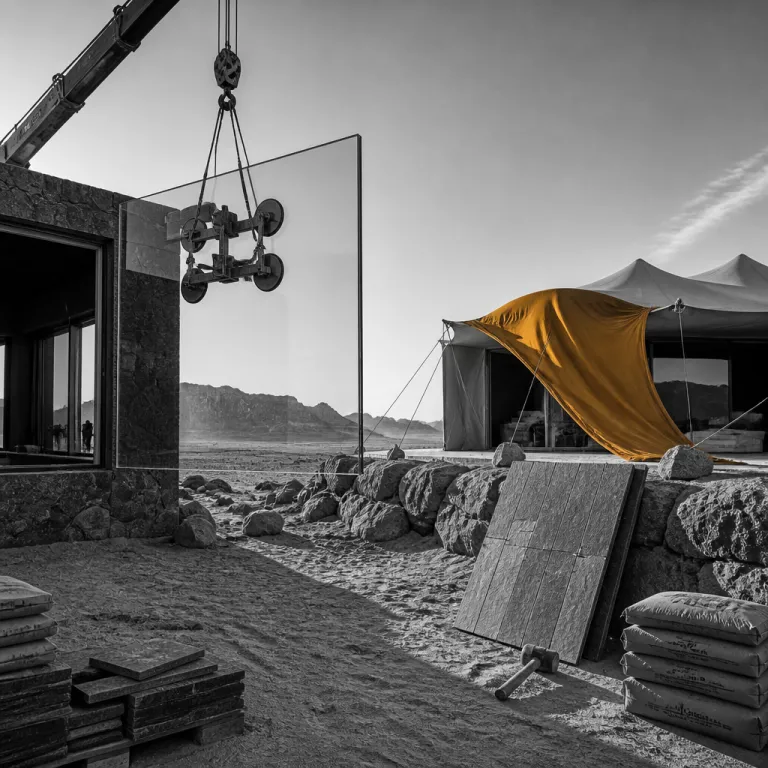
The basalt school is the newest and most subtle chapter in desert glamping in Jordan, and it is where architecture and geology meet. Instead of glass domes or canvas tents, these projects use local basalt and sandstone to create low structures that seem to grow out of the rum desert floor, echoing the work of basalt sculptors in Mafraq who carve the same rock into contemporary forms. In this philosophy, the camp almost disappears during the day, and the drama comes not from the building itself but from the way it frames the wadi and the shifting light.
Basalt based camps are still relatively rare in Wadi Rum compared with glass and canvas camps, but the design language is spreading across Jordan’s desert regions, from the Dana Biosphere Reserve to the Eastern Desert and the oases around Azraq. These properties often work closely with local artisans to integrate carved basalt details, and they tend to attract guests who care deeply about environmental impact and cultural continuity. The dataset on Mafraq notes that “Number of basalt sculptures created in Mafraq (2025) 50 pieces source Mafraq Cultural Directorate”, and that same creative energy is now informing how some architects think about permanent structures in the wadi rum area.
From a sustainability perspective, the basalt school has compelling advantages over both glass and canvas. Local stone has a lower transport footprint than imported materials, and thick basalt walls provide natural insulation that keeps interiors cooler by day and warmer at night, reducing the need for constant air conditioning in a desert camp setting. For couples, this translates into a different kind of luxury camp experience where comfort comes from thermal mass and quiet rather than from visible technology, and where a camp night feels more like staying in a desert lodge that just happens to sit within sight of the rum wadi cliffs.
These basalt oriented projects also open interesting possibilities beyond Wadi Rum, especially in places like Dana where steep topography and fragile ecosystems make lightweight canvas camps less practical. In Azraq and the Eastern Desert, basalt structures can anchor glamping sites that serve as gateways to wetlands and basalt plateaus, offering guests a coherent narrative that links geology, wildlife and human settlement. When you compare prices and booking options across basalt, glass and canvas properties, remember that basalt builds are usually more permanent and may carry a slightly higher nightly rate, but they often deliver better acoustic privacy and a stronger sense of place.
For couples planning a wider Jordan itinerary that moves from desert to sea, it can be interesting to pair a basalt based desert camp with a stay in Aqaba’s new generation of design forward hotels. Our analysis of Aqaba’s new luxury cluster shows how coastal properties are also experimenting with local materials and layered hospitality, creating a dialogue between the rum desert and the Red Sea. This kind of pairing underscores how basalt, glass and canvas are not just aesthetic choices but part of a broader conversation about how Jordan wants to host guests across its most fragile landscapes.
Which design school suits your stay: sleep, experience, photographs and footprint
Choosing between glass, canvas and basalt for desert glamping in Jordan is ultimately about priorities. If your dream is to lie in bed and watch the night wadi sky arc overhead without stepping outside, then a glass dome or bubble tent in a well spaced luxury camp will probably feel like the best use of your time and budget. Couples who care more about human connection and Bedouin hospitality than about uninterrupted views often find that a thoughtfully run canvas camp delivers a richer experience, even if the tent walls are opaque and the bathrooms are shared.
From a sleep quality perspective, basalt structures usually win, followed by well insulated canvas tents and then glass domes, which can amplify wind and generator noise if the camp layout is not carefully planned. Reviews from previous guests often mention how quiet or noisy a particular rum camp felt at night, and those comments are more reliable indicators than marketing photos when you are comparing options. For light sleepers, a basalt based desert camp or a smaller canvas Bedouin camp set away from the main rum village and visitor center will usually provide a more restful camp night than a cluster of closely packed domes.
Photographs tell a different story, and here the glass school still dominates. Transparent tents and Martian style domes photograph dramatically against the rum desert backdrop, and they are the reason many couples first search for desert glamping in Jordan when planning a trip. Canvas camps, however, often yield more intimate images around the fire or during a camel ride at golden hour, while basalt properties excel at minimalist compositions where architecture and rock merge into a single line on the horizon.
The environmental footprint question is more complex and should matter to any couple choosing a desert camp in a protected area. Glass domes require significant energy for cooling and can be visually intrusive if not carefully sited, while canvas tents are lighter on the land but can still generate waste and noise if camps grow too quickly. Basalt structures use local materials and can be more energy efficient, but their permanence means that site selection and scale must be handled with care to avoid overbuilding in sensitive parts of the wadi rum ecosystem.
When you compare price and booking conditions, remember that the cheapest option is rarely the best value if it compromises on environmental practices or community engagement. Look for camps that employ rum Bedouin staff in meaningful roles, that limit the number of tents to preserve silence, and that offer tours designed to spread visitors across different sites wadi wide rather than concentrating everyone at the same rock bridge at the same time. In the dataset, one of the core goals is to “Support local communities and artisans”, and choosing a camp aligned with that principle is one of the most powerful decisions a couple can make.
Practical guidance: reading reviews, planning tours and extending beyond Wadi Rum
Turning the design theory of desert glamping in Jordan into a real itinerary starts with reading reviews like an editor, not like a dreamer. Focus on comments from previous guests about noise levels, generator hours, water pressure and the quality of the included tour rather than on the number of stars alone. When a rum camp has consistent praise for its Bedouin hosts, its food and its respect for the desert, that usually matters more than one dramatic photo of a tent under the Milky Way.
Plan your time in Wadi Rum around light and temperature rather than around a checklist of sites wadi wide. A sunrise camel ride from a Bedouin camp can feel more intimate than a midday 4x4 tour that hits every rock bridge, and a late afternoon hike through a narrow wadi can be more memorable than a rushed circuit of the main viewpoints. Many of the best camps now offer flexible tour options that can be tailored for couples, from private jeep excursions to guided walks that end with tea brewed in the shade of a sandstone wall.
Beyond Wadi Rum, consider adding a night in Dana or Azraq to experience how desert architecture shifts with altitude and ecology. In Dana, stone built lodges cling to the edge of the canyon, while in Azraq and the Eastern Desert, basalt structures sit beside wetlands and black rock fields, offering a different reading of Jordan’s desert story. The same principles apply when choosing where to stay: look for properties that use local materials, that work with nearby communities and that treat the desert as a living environment rather than as a backdrop.
For couples who also value culture, the Meraki Glass House & Art Retreat in Al Salt shows how glass architecture can host not only glamping style stays but also creative residencies. The dataset describes it clearly : “What is the Meraki Glass House? A glass house in Al-Salt hosting art retreats.” That same spirit of collaboration between designers, artisans and hosts is what makes the most thoughtful desert camps in Jordan stand out, whether they are built from glass, canvas or basalt.
Finally, remember a few simple guidelines that apply across all these design schools when you plan your desert glamping in Jordan. Book accommodations in advance, especially for peak seasons when the best luxury camp options sell out quickly, and always respect local customs, from dress codes to how you interact with Bedouin hosts. Prepare for the desert climate with layers, sun protection and plenty of water, and you will be free to focus on what matters most : the quiet, the stars and the feeling of waking up in a landscape that has shaped Jordan’s identity for centuries.
FAQ: desert glamping and design led camps in Jordan
What is the main difference between glass, canvas and basalt camps in Wadi Rum?
Glass camps focus on panoramic views and astrotourism, using domes or bubble style tents to maximise the night sky, while canvas camps build on Bedouin tent traditions with upgraded comforts and strong communal spaces. Basalt oriented properties use local stone to create low impact structures that blend into the rum desert landscape and offer excellent thermal comfort. Your choice should depend on whether you prioritise views, social atmosphere or environmental integration during your stay.
How many desert camps operate in Wadi Rum and do they all offer luxury standards?
There are now more than thirty camps operating in the wider wadi rum area, ranging from simple Bedouin camps to high end glamping sites with private bathrooms and air conditioning. Not all of them meet international luxury expectations, so it is essential to read detailed reviews from previous guests and to check recent photos before booking. myjordanstay.com focuses on a curated selection of camps that consistently deliver strong service, design coherence and respect for the desert environment.
Is a camel ride essential to the desert glamping experience in Jordan?
A camel ride is not mandatory, but it remains one of the most atmospheric ways to experience the rum wadi landscape, especially at sunrise or sunset when the light is soft. Many Bedouin camp hosts offer short rides that can be combined with jeep tours, allowing couples to sample the traditional mode of travel without spending an entire day in the saddle. If you prefer hiking or 4x4 tours, you can still have a complete desert glamping experience without riding a camel.
Which areas beyond Wadi Rum are worth visiting for desert architecture?
Dana, Azraq and the Eastern Desert all offer compelling examples of how Jordanian architects and hoteliers are adapting to different landscapes. In Dana, stone lodges and eco focused camps perch on canyon edges, while in Azraq basalt structures sit near wetlands that attract migratory birds. The Eastern Desert features black basalt fields and remote lodges that appeal to travellers who want a quieter alternative to Wadi Rum’s more visited camps.
How far in advance should couples book desert glamping stays in Jordan?
For peak travel periods, couples should aim to secure their preferred desert camp at least several weeks in advance, especially for glass domes and high demand luxury tent categories. Canvas and basalt properties may have slightly more flexibility, but the best located tents and suites still sell out quickly when the weather is mild. Booking early also gives you more choice of tour options and allows you to coordinate your wider Jordan itinerary, including nights in Amman, Petra and Aqaba.