The real cost of a pool in the desert: why water defines luxury in Jordan
Step into a marble lobby in Jordan and the first impression is often water. A mirror-still pool in Amman, a cascade beside the Dead Sea spa, or a chilled towel after a long travel day feels effortless. Yet this is a country where renewable fresh water averages about 61 cubic metres per person annually, far below the global poverty line for water security. According to the Ministry of Water and Irrigation and World Bank assessments, Jordan ranks among the most water-stressed nations on Earth. In high-end properties, every infinity pool and every rain shower is therefore an engineering decision, not a decorative flourish.
Compared with other luxury destinations in the Middle East, Jordan operates on a fraction of the water budget. Gulf resorts on the Red Sea coast can lean on large-scale desalination, while many properties in Jordan must stretch limited groundwater and carefully managed surface supplies governed by strict national allocation plans. That reality shapes how each hotel approaches sustainability, from eco-friendly landscaping to the way food is sourced and how laundry is handled. For guests choosing environmentally responsible accommodation in Jordan, understanding this context turns a simple room booking into a conscious act of responsible tourism.
Water scarcity also reframes what “green” means in Jordan’s high-end hotels. A property can run on renewable energy and still be wasteful with water, which is the scarcest resource in this desert kingdom. The most credible eco-conscious resorts now treat water as the core environmental KPI, integrating energy-efficient systems, solar-powered infrastructure and careful water reuse into the heart of their design. In this landscape, a truly eco-friendly hotel is one that protects Jordan’s fragile nature while still delivering the level of comfort luxury travelers expect.
Inside the plumbing: how Jordan’s luxury hotels engineer every drop
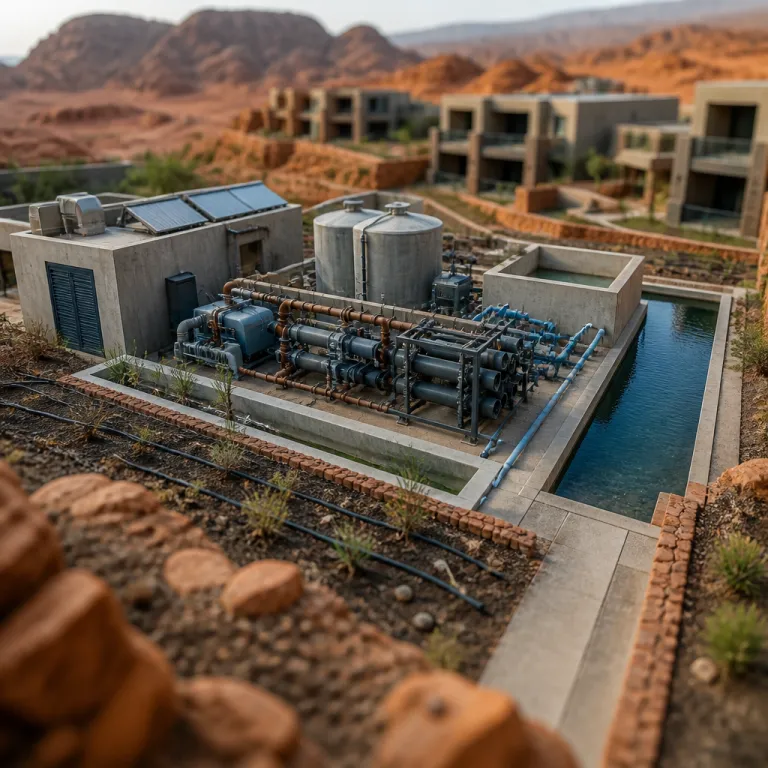
Behind the polished stone corridors of a Jordan luxury hotel lies a maze of pipes, meters and treatment tanks. Engineers at leading hotels in Amman and Petra now treat water like a precious asset, monitored almost as closely as revenue. They install low-flow fixtures, replace deep bathtubs with walk-in showers and use water sub-meters on each floor to track consumption in real time.
At Mövenpick Resort Petra, a sustained focus on water audits and guest education has been credited in public sustainability communications with cutting usage by roughly a quarter over several years. That reduction did not come from asking guests to sacrifice comfort, but from quiet changes such as aerated shower heads, efficient laundry cycles and landscaping that favours native plants adapted to the desert climate. These measures sit alongside energy-saving tools like LED lighting and motion sensors, which reduce electricity demand and indirectly lower the hotel’s overall carbon footprint.
Some coastal properties near the Red Sea use seawater-cooled chillers to reduce freshwater demand for air conditioning, pairing this with solar energy arrays on rooftops and service buildings. In the capital, Four Seasons Hotel Amman has aligned its engineering strategy with Green Key certification, using detailed water audits and smart controls to support broader sustainability goals documented in its environmental reports. For travelers comparing different responsible stays in Jordan, these behind-the-scenes systems matter as much as the spa menu or the view in hotel marketing photos. For a deeper dive into how one desert lodge has built its entire model around water and community, the analysis of Feynan Ecolodge and Jordanian sustainability is essential reading.
From Amman to Wadi Rum: regional water strategies across Jordan’s luxury map
Water engineering in environmentally conscious hotels shifts dramatically as you move across the country. In Amman, where rainfall is modest but more reliable than in the southern desert, some hotels experiment with rainwater harvesting on rooftops and terraces. Collected water can be filtered for irrigation, reducing pressure on municipal supplies while keeping green courtyards and shaded terraces alive.
Head south to Wadi Rum and the equation changes, because rainfall is rare and the desert landscape is fragile. High-end camps and lodges here must truck in water or draw carefully from limited aquifers, making every shower and every load of laundry a deliberate choice. The most careful operators in Jordan’s desert regions use low-pressure systems, encourage shorter showers and design spa facilities that rely more on heat and air than on large water features.
Along the Dead Sea, luxury resorts face a different environmental story, as the water level drops by roughly one metre each year, according to regional monitoring programmes. Here, responsible tourism means not only managing hotel consumption but also acknowledging the wider environmental crisis that shapes the region. Properties that take sustainability seriously invest in greywater recycling for gardens, use salt-tolerant plants and integrate renewable energy to offset their carbon footprint. Travelers interested in how Jordan balances water, forests and tourism beyond the desert can explore the perspective on the Yarmouk forests and UNESCO biosphere status, which complements the story of water-stressed luxury in the south.
Greywater, desalination and biosphere reserves: where innovation meets landscape
The most advanced eco-lodges and resorts in Jordan now treat used water as a resource rather than waste. Greywater systems capture water from showers and sinks, then filter and disinfect it for reuse in irrigation or toilet flushing. In technical studies by regional water institutes, well-designed systems have been shown to recycle a large share of this stream, dramatically reducing the volume of fresh water hotels need to draw from stressed sources.
In Aqaba, on the Red Sea, several high-end hotels rely on desalinated water, pairing this with solar energy to reduce the environmental cost of turning seawater into drinking water. Desalination is energy intensive and can increase greenhouse gas emissions if powered by fossil fuels, so the best operators in tourism-focused areas invest in renewables and efficiency to keep their operations as close to carbon neutral as current technology allows. These hotels also rethink landscaping, using native species that thrive in salty soils and require less irrigation, which protects both the coastal ecosystem and the hotel’s long-term water budget.
Inland, properties near the Dana Biosphere and other protected areas face a different challenge, because they operate within or beside a biosphere reserve that prioritises conservation. Lodges such as Feynan Ecolodge, set in the desert canyons near the Dana Biosphere, use solar power, minimal water fixtures and close collaboration with local communities to keep their environmental impact low. Their model shows how sustainable tourism can support nature, reduce the carbon footprint of travel and still offer a rich, comfortable experience. Guests who want to read full case studies on these approaches will find that many Jordanian hotels now publish detailed sustainability reports, outlining how water, energy and waste are managed in sensitive landscapes.
Luxury without guilt: how hotels communicate sustainability to guests
For many travelers, the first sign of sustainability in a Jordan hotel is a small card by the sink asking them to reuse towels. That message is only the surface of a much deeper strategy, which the most thoughtful properties now communicate with more nuance. They explain why water matters in Jordan, how their systems work and what guests can do without feeling that their holiday is being policed.
Some luxury hotels in Amman host short lobby talks or in-room videos that outline their environmental initiatives, from Green Key certification to investments in renewable energy and eco-friendly design. They highlight partnerships with local communities, such as sourcing food from nearby farms or supporting artisans whose work reflects Jordan’s nature and culture. This narrative reframes sustainability as part of the luxury experience, not an add-on, by showing how responsible tourism can deepen a stay rather than restrict it.
Communication also extends to how hotels frame indulgence in water-rich spaces like spas and pools. Properties that lead in sustainable tourism are transparent about how much water they use, how much they recycle and how they offset their remaining carbon footprint. They may invite guests to join guided walks in the desert or along the Dead Sea shore, where the visible signs of climate stress make the water question tangible. For a broader view of how international attention has reshaped high-end demand and expectations in Jordan, the analysis of Jordan’s luxury demand curve after a royal visit offers useful context.
The National Water Conveyor and the future of Jordan’s luxury hospitality
Jordan’s National Water Conveyor, a multi-billion dollar infrastructure project, promises to bring desalinated water from the Red Sea inland. For the hospitality sector, this could reshape how water-scarce destinations plan their long-term resource strategies. More reliable supply would ease some operational pressure, but it will not erase the environmental realities of running pools and spas in one of the world’s most water-scarce countries.
Hotel owners and general managers are already debating what this new pipeline should mean for sustainability. Some argue that increased supply could tempt properties to relax their conservation efforts, expanding water-intensive features without fully accounting for their environmental cost. Others see the conveyor as an opportunity to double down on efficiency, using the new system as a safety net while continuing to invest in greywater recycling, solar energy and advanced monitoring to keep consumption low.
For travelers, the key question is how to choose hotels that will treat the conveyor as a complement, not a licence to waste. Look for properties that maintain or pursue key certification such as Green Key or Green Globe, publish clear sustainability data and engage openly with the water issue in Jordan. As one industry summary puts it plainly, “How are Jordan's luxury hotels conserving water? By installing low-flow fixtures, replacing bathtubs with showers, and conducting water audits.” Guests who prioritise these practices help push the market toward a future where luxury and water responsibility are inseparable.
How to choose a truly sustainable luxury stay in Jordan
Selecting environmentally responsible hotels in Jordan starts with asking precise questions rather than relying on generic eco labels. Begin by checking whether the hotel holds recognised sustainability certifications such as Green Key or Green Globe, and whether those awards are current and independently verified. A credible hotel will explain how it manages water, energy and waste, not just mention a few green initiatives in passing.
Next, look at how the property relates to its surroundings, whether that is an urban district in Amman, a stretch of Dead Sea shoreline or a remote corner of the desert near Wadi Rum. Hotels that integrate local communities into their operations, from hiring to food sourcing, tend to have a more grounded approach to responsible tourism. They often support conservation projects in nearby nature reserves or biosphere areas, which helps protect the landscapes that draw travelers to Jordan in the first place.
Finally, pay attention to the details that reveal a hotel’s real priorities, such as whether it uses renewable energy, how it handles single-use plastics and how it encourages guests to reduce their own carbon footprint. A property that invests in solar panels, efficient water systems and transparent reporting is more likely to remain sustainable as tourism in Jordan grows. When you choose such a hotel, you are not only securing a comfortable stay with a memorable view hotel experience, but also contributing to a model of travel that respects Jordan’s most fragile resource.
Key figures on water, sustainability and luxury hotels in Jordan
- Jordan’s renewable fresh water availability is about 61 cubic metres per person per year, far below the 500 cubic metre threshold often used to define severe water poverty, which makes water efficiency central to every luxury hotel project in the country (data from the International Trade Administration and Ministry of Water and Irrigation).
- Mövenpick Resort Petra has reported reducing its water consumption by roughly 25 percent over several years through measures such as low-flow fixtures, water audits and operational changes, showing that significant savings are possible without compromising guest comfort (based on figures cited in public award and sustainability materials).
- Well-designed hotel greywater systems in arid regions can recycle a substantial share of water from showers and sinks for irrigation and other non-potable uses, which can cut demand for fresh water by tens of thousands of litres per day during peak tourism seasons, according to regional water management studies.
- Dead Sea water levels are dropping by around one metre each year, a trend documented by regional monitoring programmes that threatens local ecosystems and underlines why resorts in the area must combine water conservation with broader environmental stewardship.
- Four Seasons Hotel Amman has achieved Green Key certification, reflecting a structured approach to sustainability that includes water conservation, energy efficiency and environmental management across its operations.
Frequently asked questions about sustainable luxury hotels and water in Jordan
How are Jordan's luxury hotels conserving water?
Jordan's luxury hotels conserve water by combining engineering upgrades with operational discipline. They install low-flow fixtures, replace bathtubs with walk-in showers, conduct regular water audits and often recycle greywater for irrigation or toilet flushing. Many also train staff and inform guests about the country’s water scarcity, so conservation becomes part of the daily culture rather than a one-time project.
Why is water conservation so critical for hotels in Jordan?
Water conservation is critical because Jordan is among the most water-scarce countries on Earth, with very low renewable fresh water per person. Hotels are intensive users of water due to pools, spas, laundry and landscaped grounds, so their choices have an outsized impact on local supplies. If luxury properties manage water poorly, they risk straining resources needed by local communities and ecosystems, especially in desert and Dead Sea regions.
What certifications should I look for when booking a sustainable hotel in Jordan?
Travelers should look for recognised sustainability certifications such as Green Key and Green Globe when booking hotels in Jordan. These programmes assess properties on criteria including water management, energy use, waste reduction and support for local communities. A certification is not a guarantee of perfection, but it signals that the hotel has undergone independent evaluation and follows structured environmental standards.
Do sustainable practices reduce comfort in luxury Jordanian hotels?
In well-managed properties, sustainable practices do not reduce comfort and often enhance it. Efficient fixtures can maintain strong water pressure while using less water, and smart climate control can keep rooms comfortable while cutting energy waste. The most advanced hotels integrate sustainability so seamlessly that guests enjoy the same or better experience, with the added satisfaction of knowing their stay has a lower environmental impact.
How can guests personally support water conservation during their stay?
Guests can support water conservation by taking shorter showers, reusing towels and linens, and reporting any leaks or dripping taps promptly. Choosing hotels with strong sustainability credentials, avoiding unnecessary pool towel changes and being mindful of spa usage also help. These small actions, multiplied across many visitors, reinforce the efforts that Jordan’s luxury hotels are already making to protect the country’s scarce water resources.