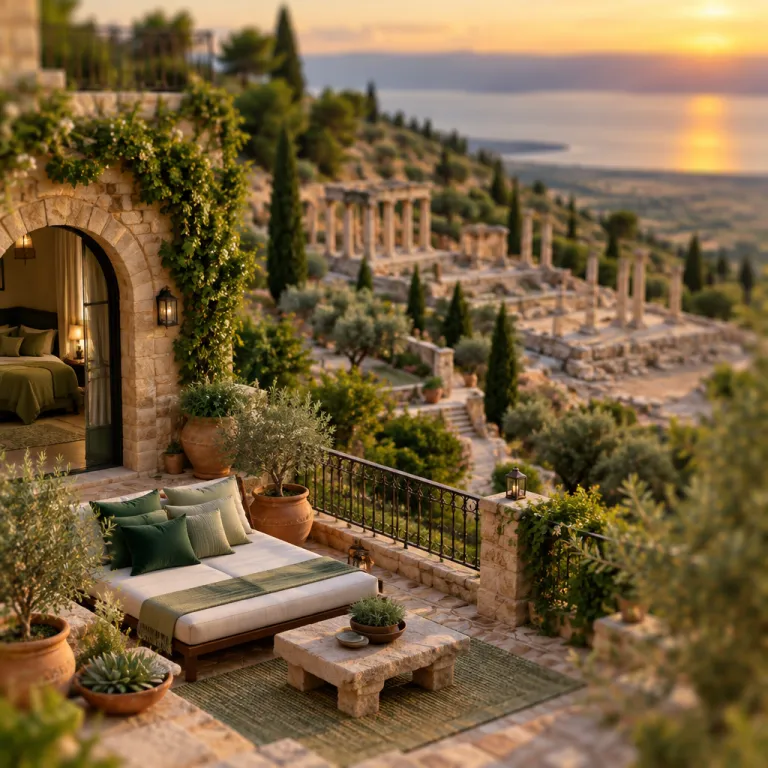
Why an Umm Qais Jordan visit belongs in a luxury itinerary
Umm Qais sits on a high basalt ridge in northern Jordan, facing a horizon that feels almost unreal. From this ancient city of Gadara you look across the Sea of Galilee, the Golan Heights and the Yarmouk gorge, reading layers of the Middle East in a single sweep. For a luxury traveler planning an Umm Qais Jordan visit, that sense of scale matters as much as thread count or room category.
The archaeological site of Umm Qais is compact yet dense, with Roman ruins, Ottoman houses and a ghostly village stitched into one walkable plateau. Here the Decumanus Maximus, flanked by dark basalt colonnades, leads you past ancient ruins, a basilica, two theatres and the remains of Byzantine churches that once anchored this hilltop city. Every step through this archaeological site connects you to the Roman Empire, to Gadara Umm as a Decapolis hub and to the quieter rural Jordan that still surrounds it.
For many visitors, the default is a rushed day trip from Amman or Irbid, ticking off things Umm Qais is “known for” before racing back south. That approach misses the real luxury of an Umm Qais Jordan visit, which lies in slowing down enough to feel the light change over the Sea of Galilee and the valleys between Israel Jordan and Jordan’s north. Stay overnight and the city empties, the panoramic views soften and the ruins become a private stage for dusk and early morning walks.
Walking Gadara: Roman colonnades, Ottoman village and layered history
Start your Umm Qais Jordan visit at the upper entrance, where the basalt theatre drops away towards the valley and the first Roman ruins appear almost immediately. This is where Gadara Umm reveals itself as both an ancient city and a lived in landscape, with the outlines of an Ottoman village threaded through the stone. A well planned travel guide style circuit lets you move from theatre to basilica to colonnaded street without backtracking, ideal for a half day of unhurried exploration.
The Decumanus Maximus is the spine of Gadara, a long basalt avenue that once linked the heart of the city to its gates and markets. Walking this street today, you pass the remains of shops, a nymphaeum and side lanes that lead towards the western terrace, where the best panoramic views open towards the Sea of Galilee and the Golan Heights. Along the way, look for the subtle details that distinguish this site Umm from other archaeological cities in Jordan, such as reused column drums in Ottoman doorways and carved lintels above collapsed homes.
Luxury travelers often combine an Umm Qais Jordan visit with curated cultural tours that frame the ruins within wider regional narratives. A private guide can unpack how Qais Gadara thrived under the Roman Empire, how the city shifted through Byzantine and Islamic periods and how the Ottoman era village layered itself over earlier foundations. For a deeper cultural journey that links Umm Qais, Wadi Rum and Amman in one coherent story, consider the tailored itineraries outlined in this overview of Jordan tours reimagined for discerning travelers.
The view: Sea of Galilee, Golan Heights and a three country horizon
The western terrace is the reason many people plan an Umm Qais Jordan visit in the first place. From here, the land falls away towards the Yarmouk gorge, the Sea of Galilee and the plateau of the Golan Heights, with the line between Israel Jordan and Jordan’s farmland visible but not intrusive. It is one of the most striking panoramic views in the Middle East, and yet the terrace often feels almost private, especially outside peak holiday days.
Arrive at least an hour before sunset to let your eyes adjust to the distances and to explore the different vantage points along the terrace. Stand near the edge of the Roman ruins to frame the Sea of Galilee between basalt columns, then move slightly north to see how the ancient city aligns with modern villages scattered across the valley. As the light softens, the outlines of archaeological sites on distant hills become clearer, and the sense of Gadara Umm as a crossroads between cities and cultures deepens.
For photographers and contemplative travelers, this is where things Umm Qais becomes less about checklists and more about atmosphere. The shift from bright afternoon glare to golden hour is slow, giving you time to notice how the Roman Empire’s grid still shapes the site Umm today. If you are planning several days in northern Jordan, use one evening here and another in Ajloun or Jerash to compare how each hilltop city engages with its landscape, then round out the circuit with the refined experiences suggested in this guide to essential things to see and do in Jordan.
Staying the night: resthouse charm and northern Jordan hotel strategy
Most visitors treat an Umm Qais Jordan visit as a simple day trip, but staying overnight changes everything. The Umm Qais Resthouse, set in a converted Ottoman building near the edge of the archaeological site, offers simple rooms with a view that no city hotel can match. Waking up with the Sea of Galilee and the Golan Heights visible from your breakfast table is a luxury measured in silence rather than amenities.
For travelers used to the polished service of capital Amman properties, the resthouse feels more like a characterful village inn than a full service resort. That is precisely its appeal for a Solo Explorer who wants cultural immersion without sacrificing comfort, especially when combined with a driver and guide arranged through a premium Jordan travel specialist. If you prefer more conventional luxury, base yourself in Amman or Irbid and arrange a private car for a long day trip, returning to your preferred brand after sunset drinks on the terrace.
When planning hotels across several days, think of northern Jordan as a complementary chapter to Wadi Rum and the Dead Sea rather than a rival. One strategy is to spend two nights in the capital Amman, one night near Ajloun Castle or Jerash and one night at Umm Qais, creating a loop of archaeological cities and rural landscapes. For a sense of how Jordanian hospitality is evolving in Amman’s historic quarters, this conversation about heritage tiles and the Jabal Amman idea offers useful context when choosing where to stay before or after your time in Gadara.
Reaching Umm Qais and designing a three day northern circuit
The drive from Amman to Umm Qais takes around two hours, either via the Jordan Valley road or through the hill country near Ajloun and Jerash. Many luxury travelers choose a private car and driver, turning the journey into a curated Middle East road trip rather than a simple transfer. Leaving the capital Amman after breakfast, you can reach Ajloun Castle by late morning, explore the fortress and surrounding forest, then continue north for an afternoon Umm Qais Jordan visit.
For a three day circuit, consider starting with Jerash, where the scale of the Roman ruins contrasts with the more intimate archaeological site Umm Qais. Spend the first night near Jerash or back in Amman, then head to Ajloun for a morning at the castle and a leisurely lunch in a nearby village. Arrive in Gadara Umm by mid afternoon, check into the resthouse or a nearby guesthouse and keep the late day free for the panoramic views over the Sea of Galilee and the Golan Heights.
On your final day, linger in the ancient city before looping back towards Irbid and Amman, or continue south towards Wadi Rum and Petra for a different expression of Jordan’s landscapes. This rhythm of days allows you to experience multiple archaeological cities without fatigue, balancing grand Roman Empire avenues with quieter hilltop sites. While no dataset of real_verified_quotes was provided for this article, the practical structure outlined here reflects on the ground experience of travelers who have combined Umm Qais, Ajloun and Jerash in one coherent itinerary.
FAQ
How long do I need for an Umm Qais Jordan visit ?
Plan at least half a day for Umm Qais, which gives you time to walk the Roman ruins, explore the Ottoman village remains and linger over the panoramic views. If you want to photograph sunset over the Sea of Galilee and the Golan Heights, extend your stay into the evening or overnight. Serious archaeology enthusiasts often dedicate a full day to the site and nearby villages.
Is Umm Qais suitable as a day trip from Amman or Irbid ?
Yes, Umm Qais works well as a day trip from both Amman and Irbid, especially with a private car and driver. The drive from the capital Amman takes around two hours each way, leaving enough time for a relaxed visit Umm Qais experience. Travelers based in Irbid can reach the site Umm in under an hour, making shorter visits feasible.
What is the best season to visit Umm Qais and northern Jordan ?
Autumn is particularly pleasant for an Umm Qais Jordan visit, with warm days, cooler evenings and golden light over the valleys. Spring is also attractive, when the hills around the ancient city and nearby villages turn green and wildflowers appear. Summer afternoons can be hot on the exposed Roman ruins, so early morning and late day are preferable then.
How does Umm Qais compare with Jerash for Roman ruins ?
Jerash impresses with its scale and preservation, offering one of the largest sets of Roman ruins in the region. Umm Qais, by contrast, feels more intimate and atmospheric, with basalt colonnades, an Ottoman village woven into the site and panoramic views towards Israel Jordan and the Sea of Galilee. Many travelers find that visiting both cities over several days gives a richer sense of the Roman Empire’s legacy in Jordan.
Can I combine Umm Qais with Wadi Rum and Petra in one trip ?
Combining Umm Qais with Wadi Rum and Petra works well in a longer Jordan itinerary that spans both north and south. Start with several days in the capital Amman and northern archaeological cities, then travel south to the desert and Red Sea for contrast. This balance between Greco Roman hilltop sites and dramatic desert landscapes creates a varied, high impact journey.